Regency Peacock Blue

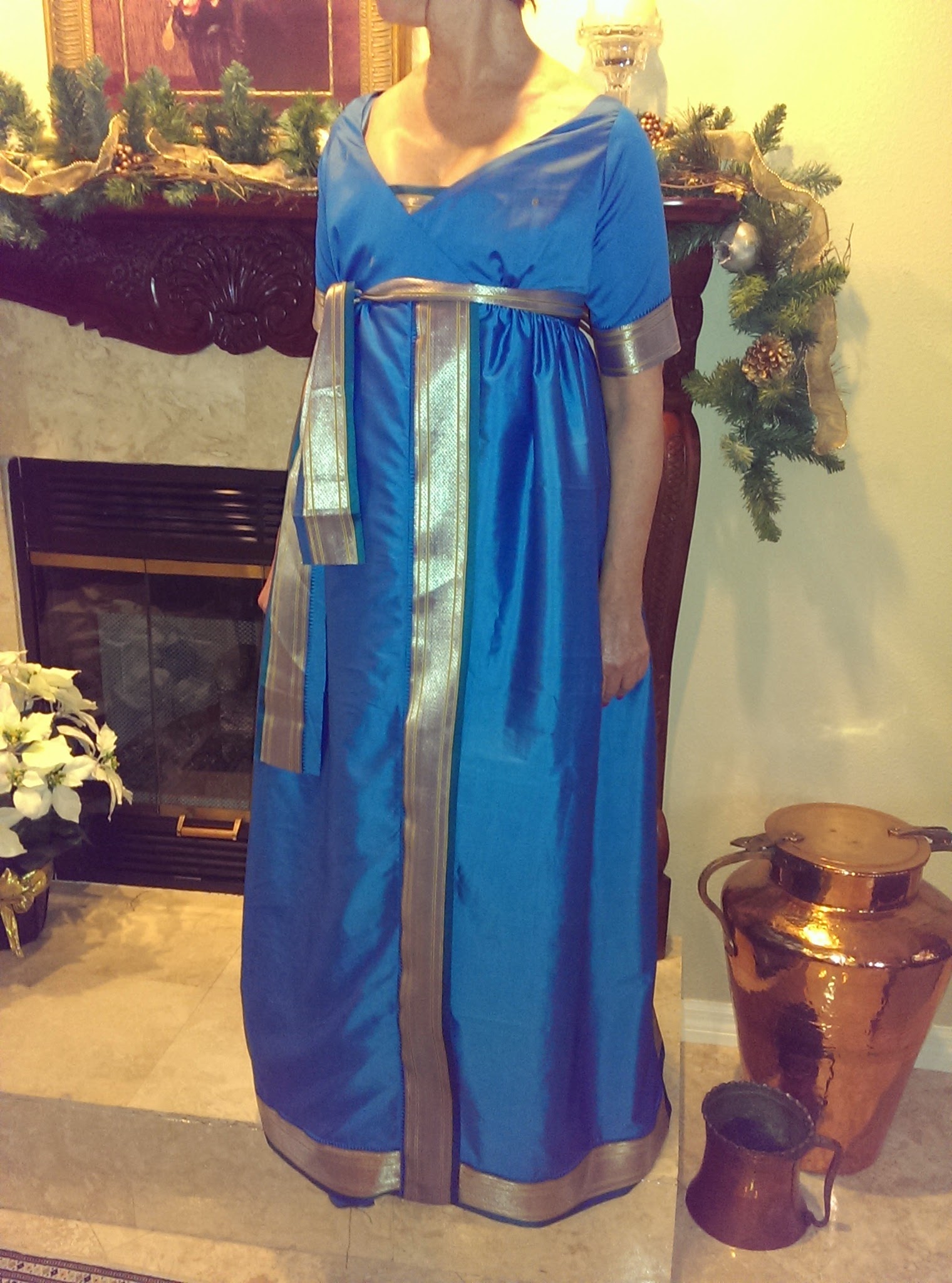
full view Peacock Blue Regency gown
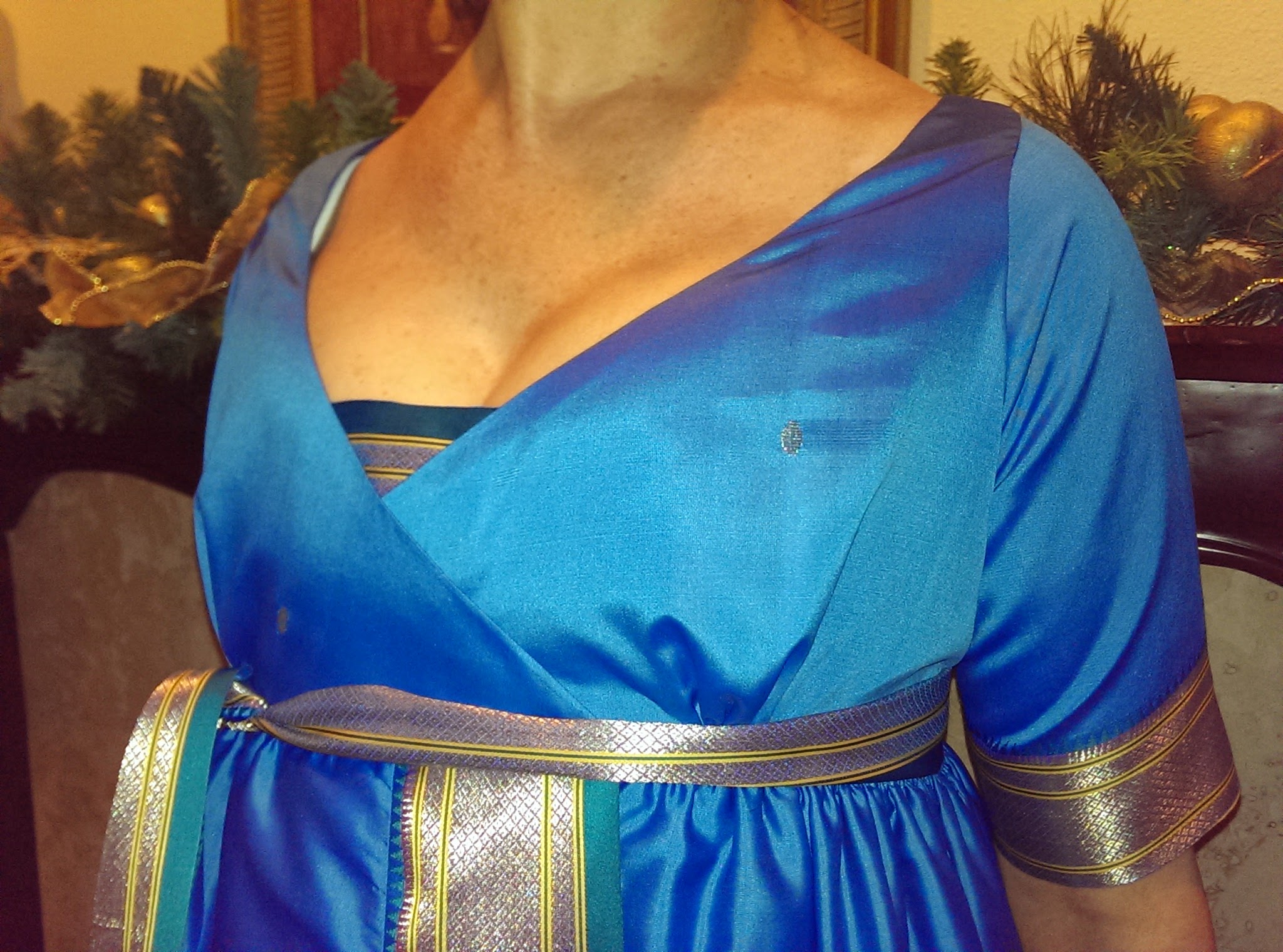
full view Peacock Blue Regency gown
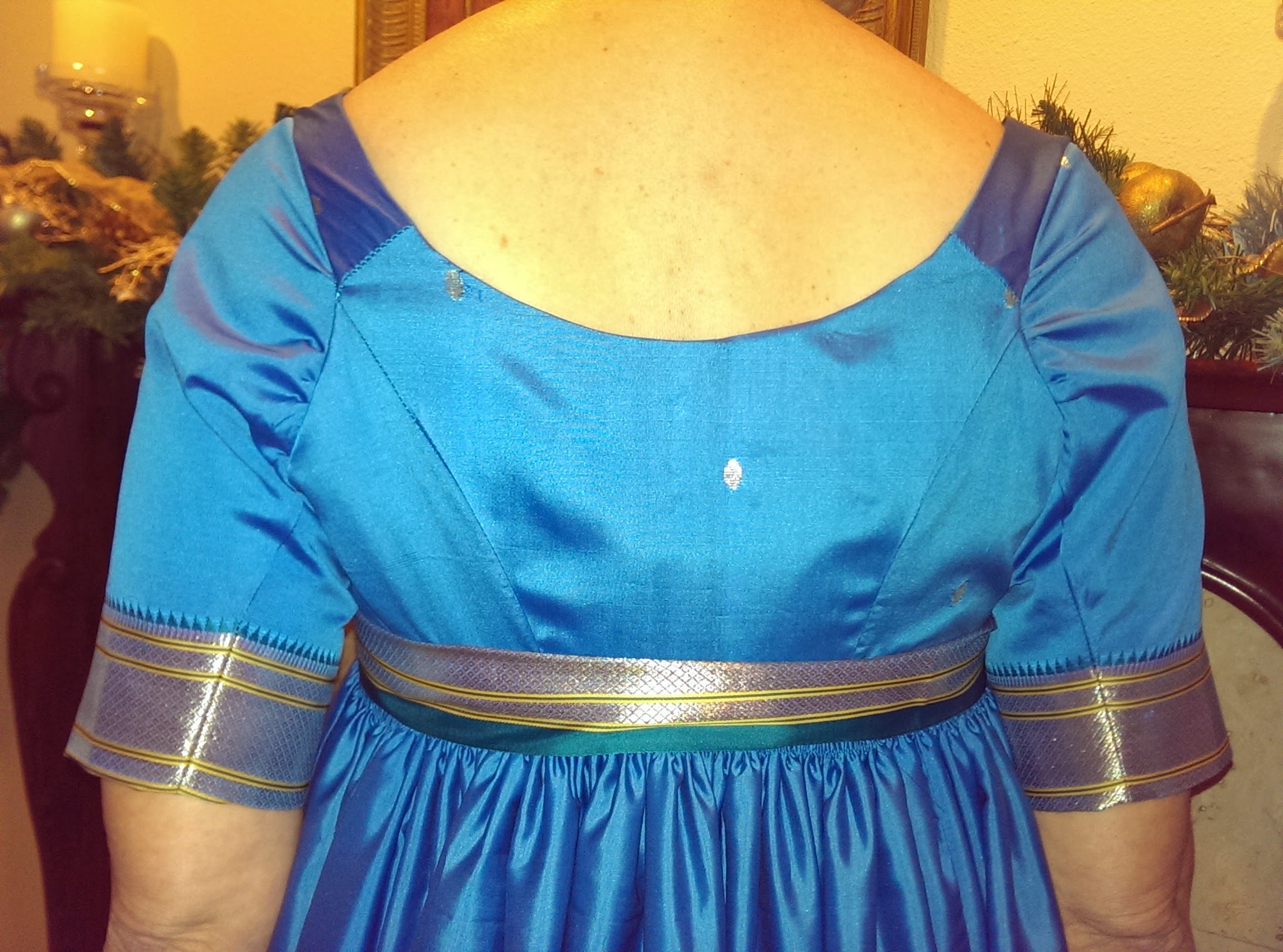
image image image image image

A Peacock Blue Regency ball gown made from a vintage silk sari, created for my mom who does English country dancing and also for the Historically Sew Monthly  February Challenge… Something Blue

The Challenge: Something Blue

February

Fabric: Vintage silk sari with metallic trim and wooden in dots, lined with cotton

Pattern: crossover bodice modified from sense and sensibility pattern, sleeves cut down to above elbow

Year: 1800

Notions: sash of extra sari border,  turban of pallu piece 

How historically accurate is it? As close to period plates and extant gowns as possible while working around the sari weave and the firing of the gown

Hours to complete: Total: 20  (Cutting and fitting: 3, Sewing: 15, Hand finishing: 2)

First worn: B, February 10, 2015

Total: $45 vintage silk sari $25, cotton lining $20, thread ?

And the few construction pics that I took…

Historical inspiration images…
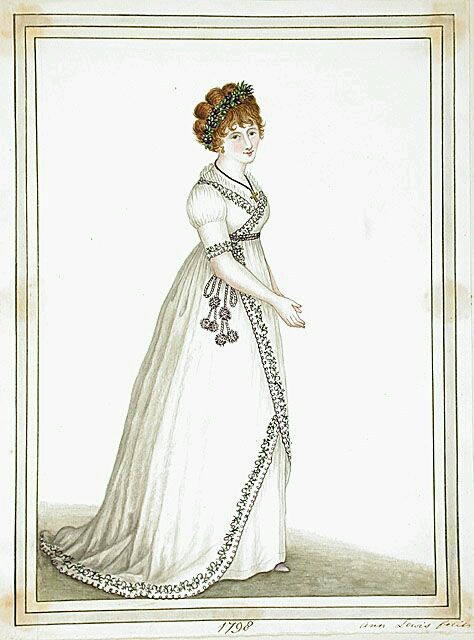
Fashion plate
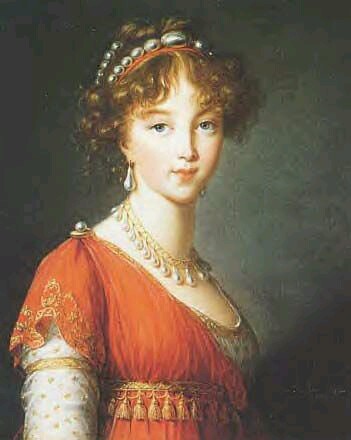
Fashion plate

Princess Maria Louisa Auguste of baden Empress Elisabeth Alexeievna Elizabeth Alexeievna (13/24 January 1779 - 4 May/16 May, 1826) was the wife of emperor Alexander I of Russia.

Princess Maria Louisa Auguste of baden Empress Elisabeth Alexeievna Elizabeth Alexeievna (13/24 January 1779 – 4 May/16 May, 1826) was the wife of emperor Alexander I of Russia.

Left: English dress and petticoat, c. 1790- 95, Center: French round gown, c. 1790-5 both held by the Kyoto Costume Institute, Right: India, dress of Lady Chambers of Calcutta, c. 1795-1800, property of Martin Kamer.
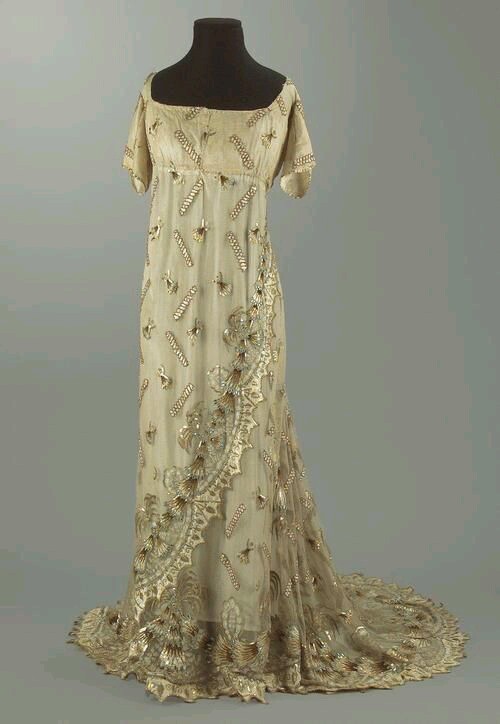
Left: English dress and petticoat, c. 1790- 95, Center: French round gown, c. 1790-5 both held by the Kyoto Costume Institute, Right: India, dress of Lady Chambers of Calcutta, c. 1795-1800, property of Martin Kamer.

1810
1810

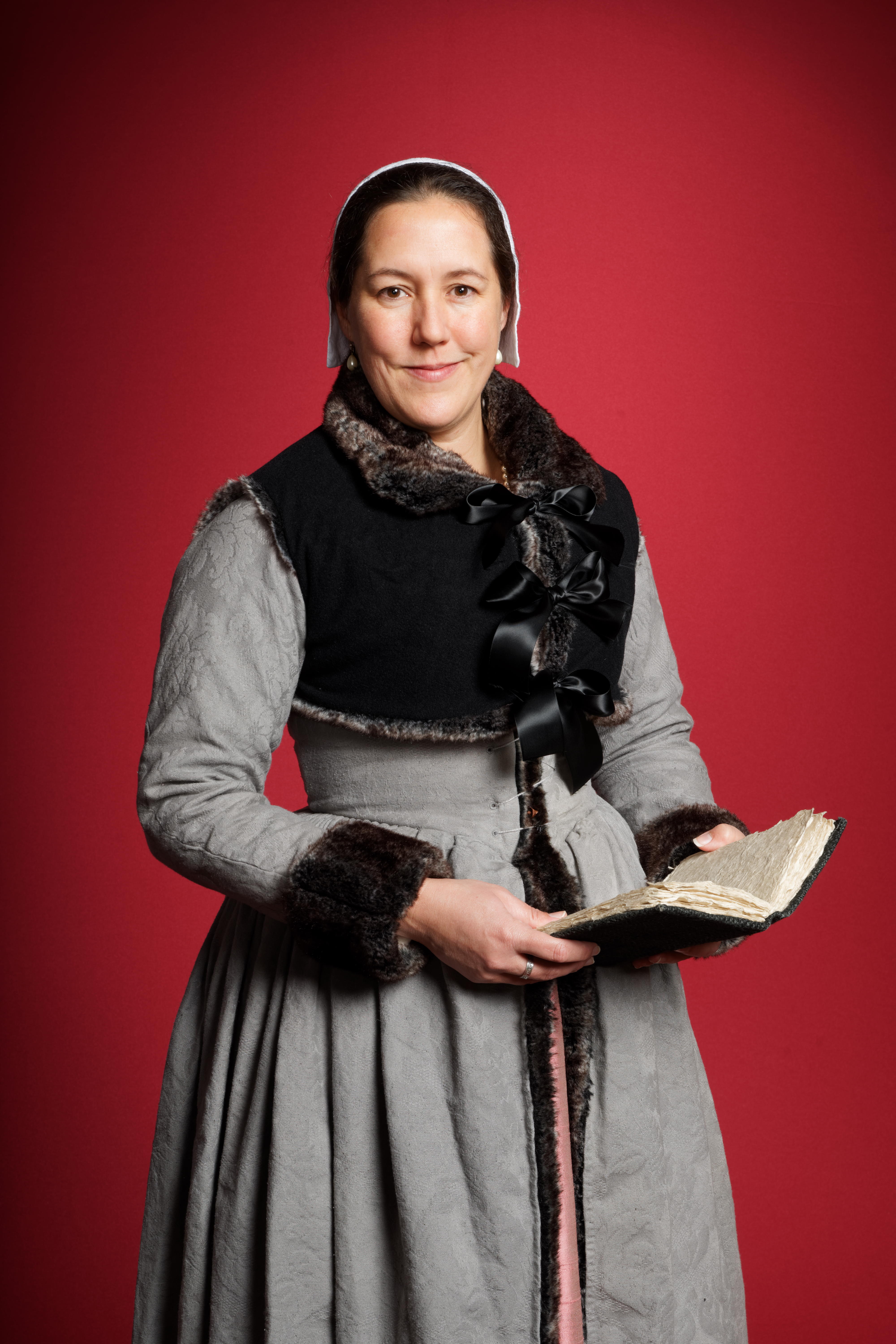
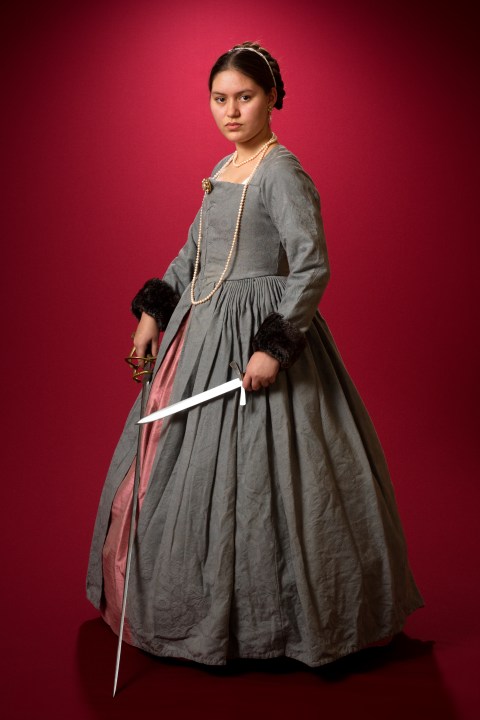
1510 Tudor Gown Grey

Period Correct Clothing to Fit Your Style… 

  • Tudor Gown of cotton jacquard and faux fur
  • Cotton twill lining
  • Petticoat of shot silk
  • Machine sewn inner seams
  • Hand finished (hems, edging, and eyelets)
  • Cotton was used for comfort and washability- this gets worn when it is much hotter than old England
  • Minimal boning in open channels so it can be removed for machine washing
  • This project was a less formal Tudor Gown I made with patterns drafted by combining the Tudor Tailor underkirtle and my body block
  • This is one project for my A&S 50 Challenge, 50 things from my stash, since all the fabrics aside from the fur were already in my stash…
  • 2017 Update- I added fur trim all around (tacked on for washing) and made a fur lined wool partlet which I LOVE- so soft and snuggly!

Photo updates:

Photo by Baron Bardulf Rauen

Photo by Baron Bardulf Rauen

Photo by Baron Bardulf Rauen

Photo by Baron Bardulf Rauen

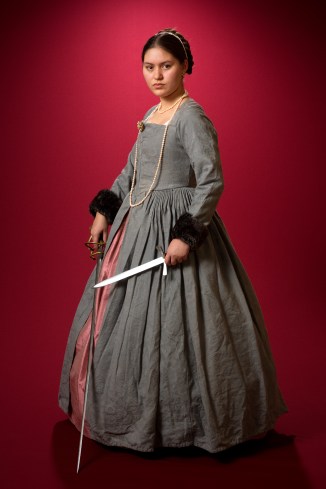
Grey Tudor with swords

Photography by Baron Bardulf Rauen

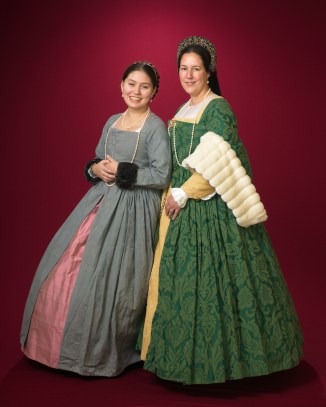
Tudor gowns

Photography by Baron Bardulf Rauen

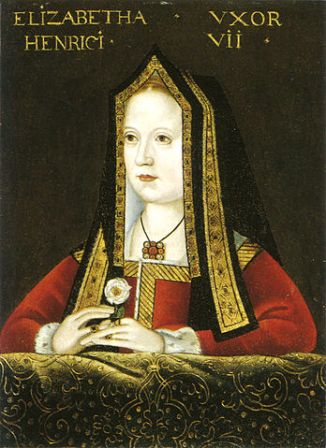
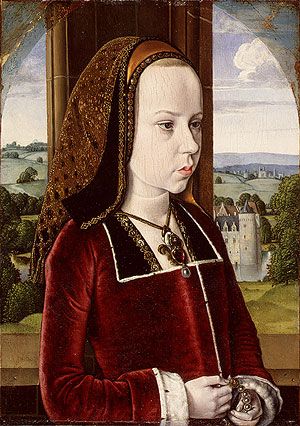
Inspiration for early Tudor Gown with narrow fur cuff sleeves-

1500-Elizabeth_of_York_from_Kings_and_Queens_of_England

1500 Elizabeth of York

Jean Hey (Master of Moulins). Portrait of Margaret of Austria

Jean Hey (Master of Moulins). Portrait of Margaret of Austria

Inspiration for fur lined partlet-

c1550-ladies-wearing-outdoor-clothing-of-brown-and-black-kirtles-and-fur-lined-surcoats

c1550-ladies-wearing-outdoor-clothing-of-brown-and-black-kirtles-and-fur-lined-surcoats

fur-partlet full coverage

fur-partlet full coverage

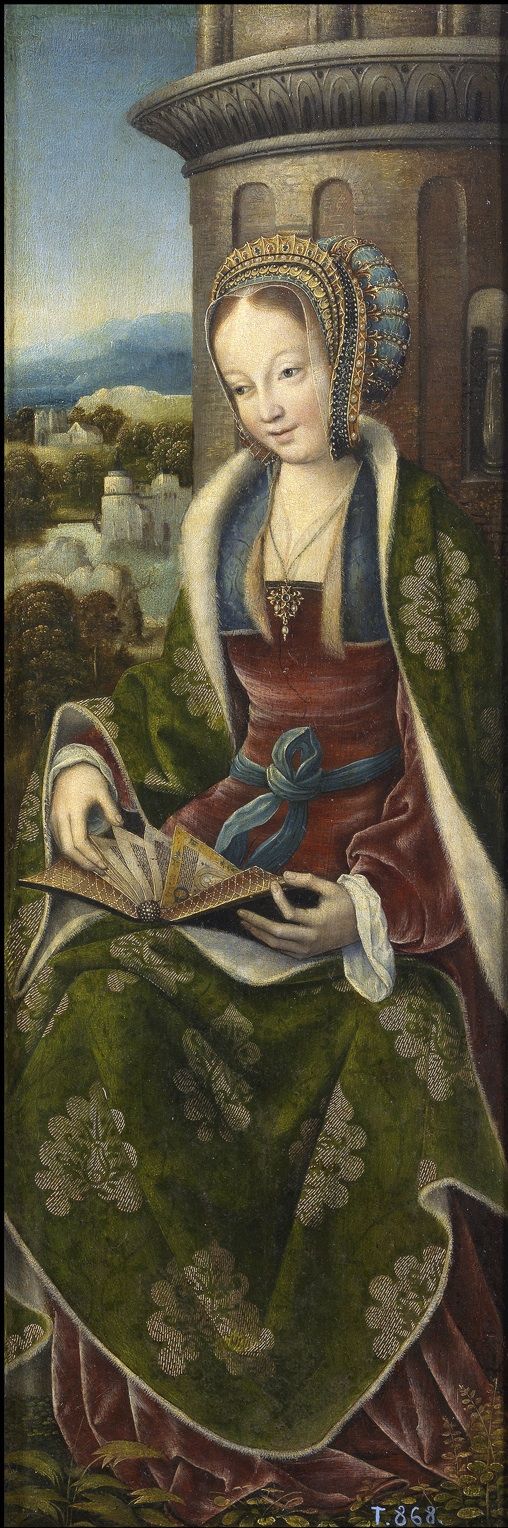
st-barbara-wings-of-tryptich-by-master-of-frankfurt-1510-1520

st-barbara-wings-of-tryptich-by-master-of-frankfurt-1510-1520

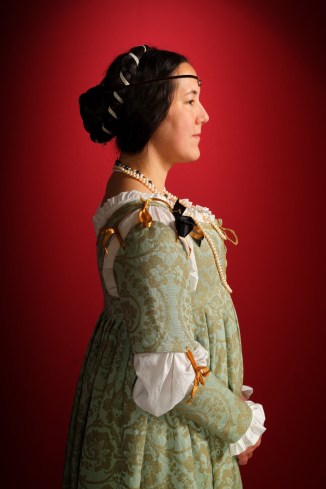
Venetian 1500 Gamurra

cropped-DSC02182a.jpg 

Portrait profile

Photography by Baron Bardulf Rauen

This is my new undergown for 1500 Venetian, created for Atlantian Twelfth Night and also for the Historically Sew Monthly January challenge…

The Challenge: Foundations- January

Fabric: Chemise of cotton voile, Gamurra of green and gold jacquard linen and rayon blend, bodice lined in 2 layers of cotton canvas, eyelets sewn with linen thread

Pattern: Drafted and refitted from my fitted body block to an under bust bodice, sleeves cut down from my sleeve sloper

Year: 1500 venice

Notions: gold braid trim,  gold ribbons (replacing now with silk and points), black ribbon for mourning, luceted lacing cord 

How historically accurate is it? As close to the portraits as I could get with little evidence from extant garments other than chemises, each decision regarding construction and cut were done after comparing multiple images,  my neckline is not quite as broad but that was based on coverage and support needed in the bodice which is unboned but is the foundation garment

Hours to complete: Total: 32   (Cutting and fitting: 6, Sewing: 12, Eyelets: 14)

First worn: Atlantian Kingdom Twelfth Night, January 10, 2015

Total cost:$102   fabric and supplies from my stash other than new silk ribbon and aigrets just acquired to add on,  estimate $24 voile, $48 linen blend jacquard (yay for half price remnant bin), trim and thread unknown,  when added $26 silk ribbons and $4 aiglets

venetian full length left

Photography by Baron Bardulf Rauen

And the few construction pics that I took…

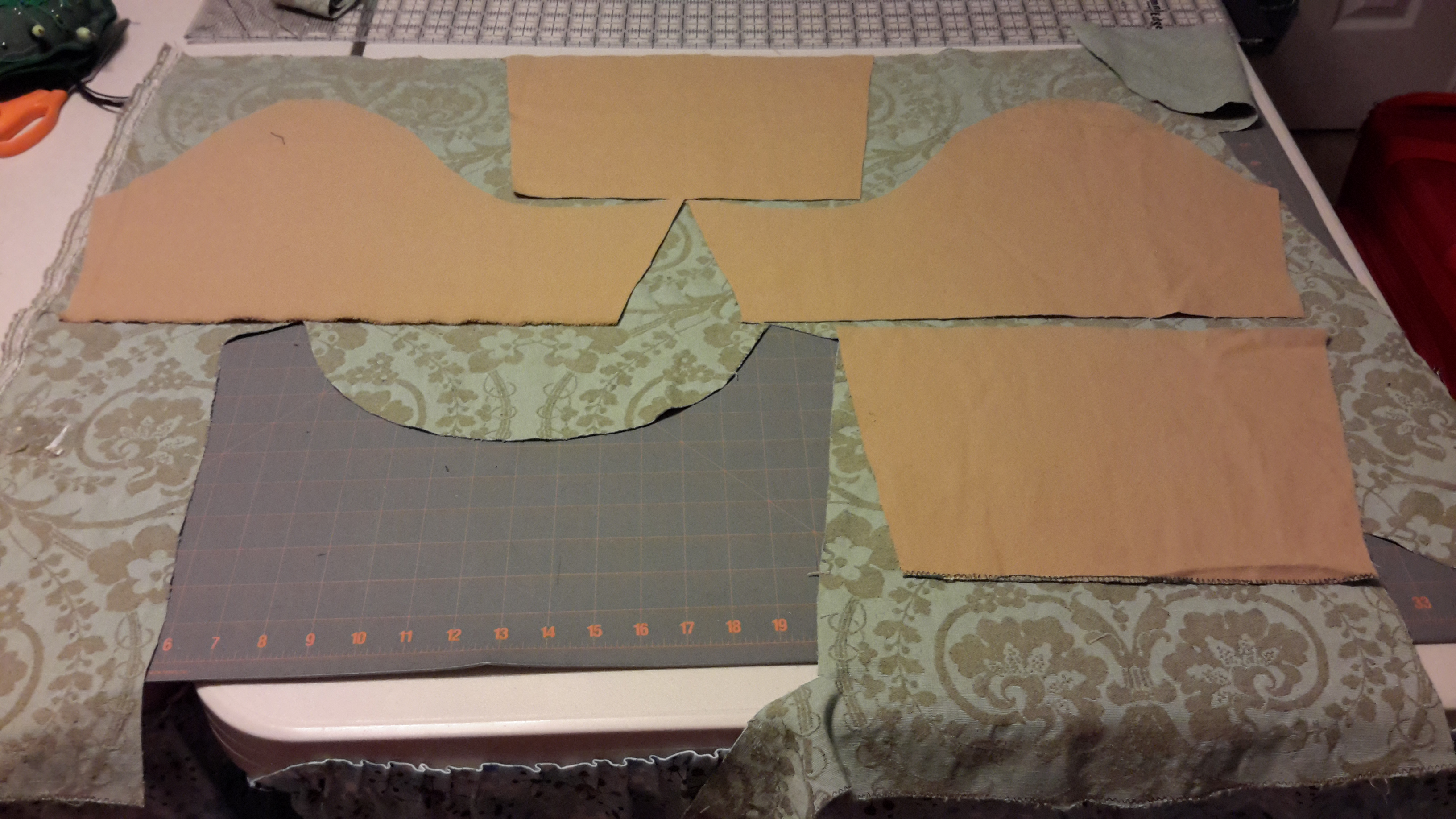
Cutting out sleeves after bodice back got a centered motif

Cutting out sleeves after bodice back got a centered motif

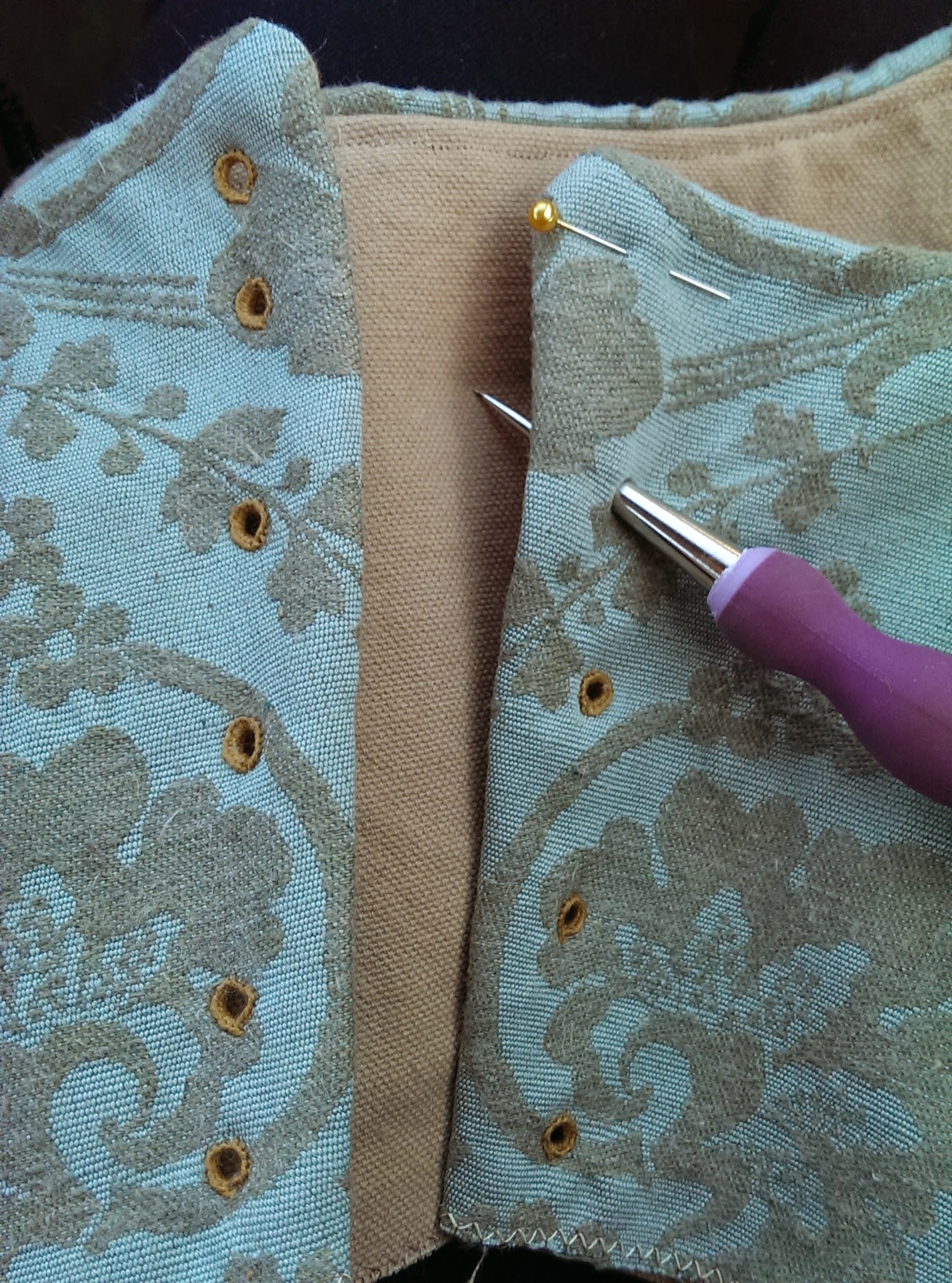
Creating eyelets on bodice

Creating eyelets on bodice

Closer view of eyelet construction

Closer view of eyelet construction

Trim and shoulder eyelets

Trim and shoulder eyelets

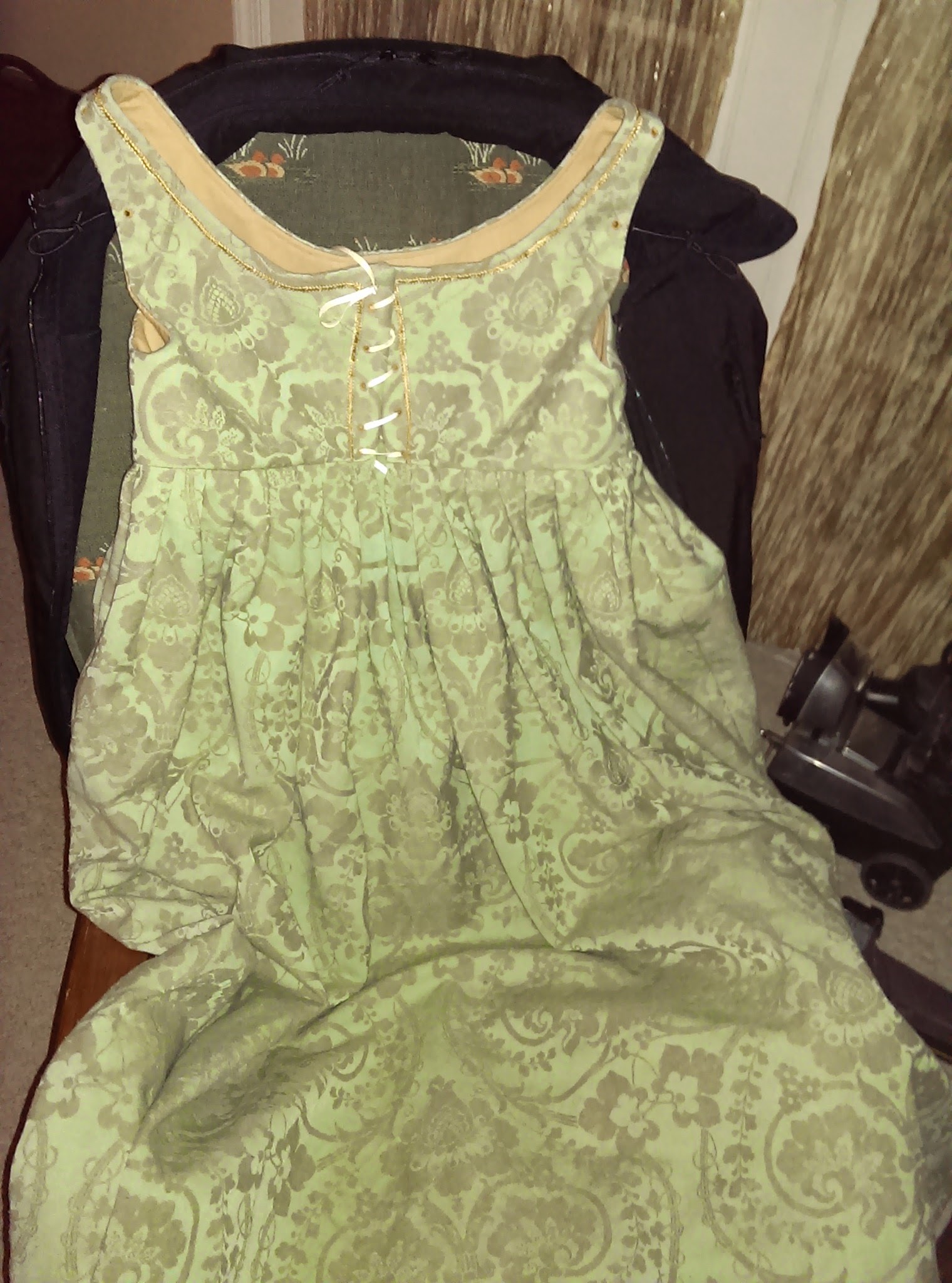
First stage done, time to finish sleeves

First stage done, time to finish sleeves

And the inspiration images:

Squared neckline but higher than some, love the ribbon detail and the black ribbon for mourning, her necklace also inspired one of mine

young venetian woman Durer

Photography by Baron Bardulf Rauen

Squared neckline and more ribbon and sleeve detail, fine gold work on edge of chemise

Supposed portrait of Bianca Sforza,an illegitimate daughter of Lodovico il Moro,c.1500

Photography by Baron Bardulf Rauen

Squared neckline with longer bodice, could be front closing with ribbon ties as on sleeves, looped and draped necklace, headband with stone

Leonardo da Vinci, La Belle Ferroniere, 1490.

Leonardo da Vinci, La Belle Ferroniere, 1490.

Ludovica Tornabuoni, by Domenico Ghirlandaio

Photography by Baron Bardulf Rauen

Rounded neckline with short bodice, both layers front closing, undergown closing edge to edge, overgown closing in wide V to show undergown, interesting partially sewn sleeves on overgown


Civil War Ball Gown- Green & Gold

Photography by Drew Harting

Photography by Drew Harting

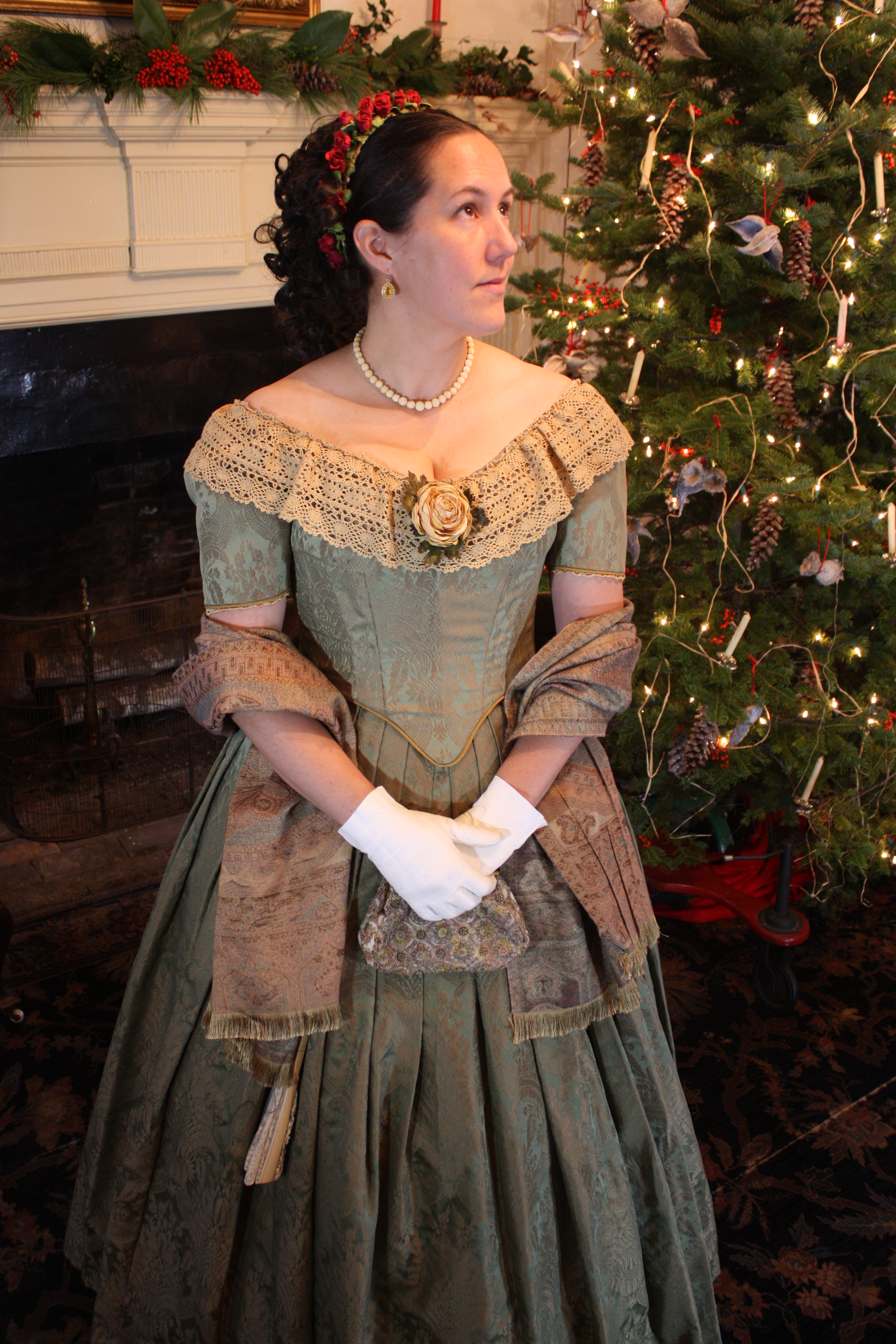
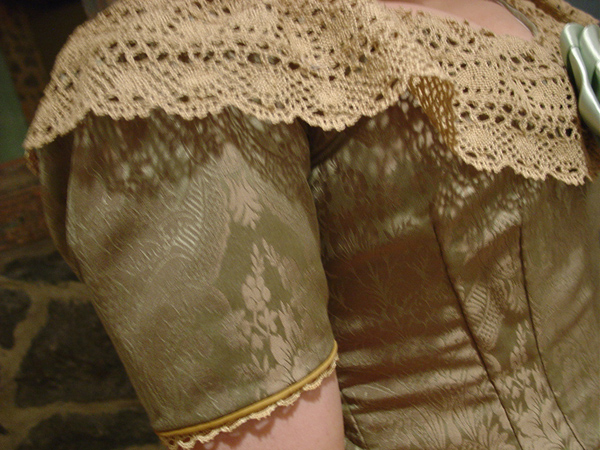
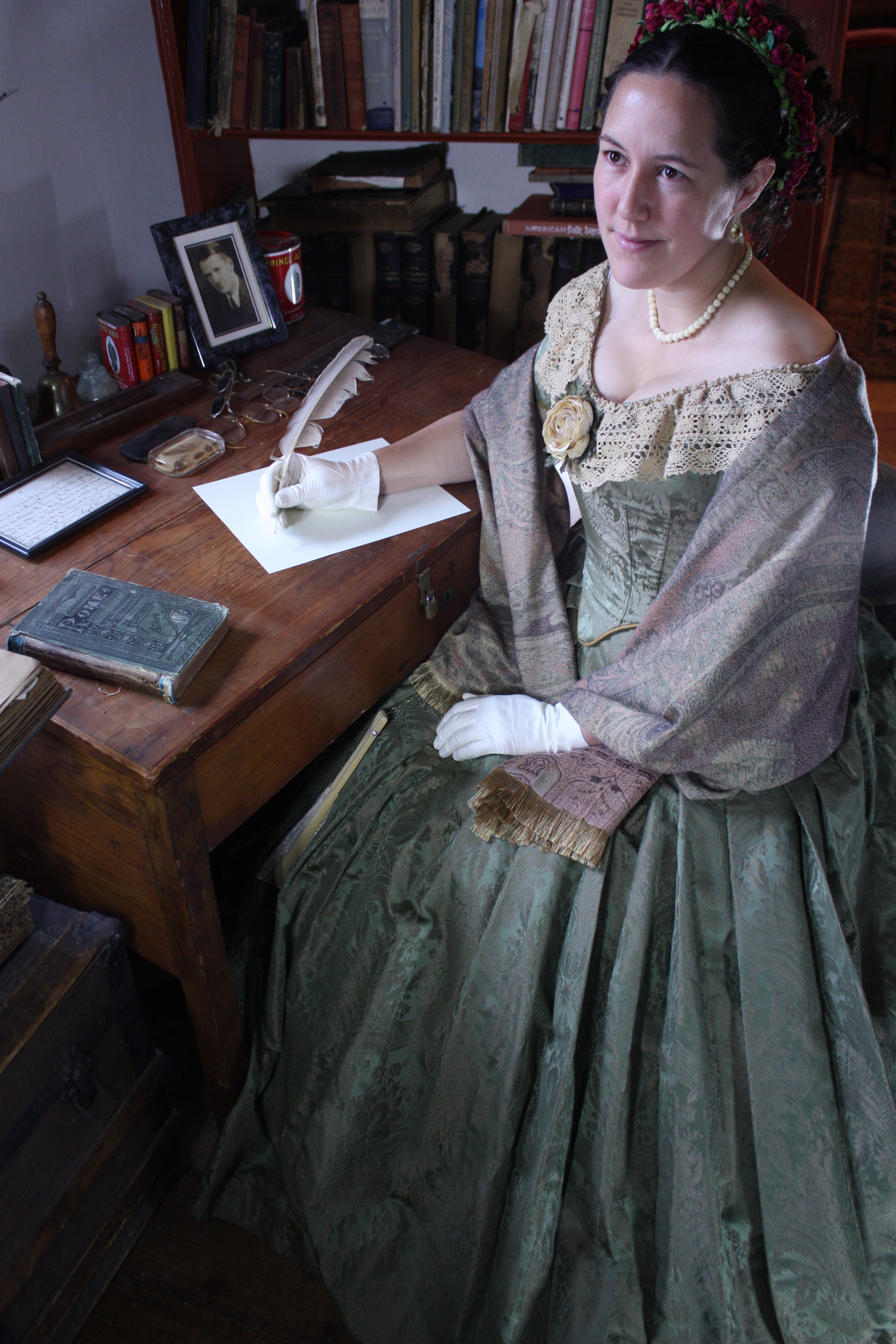
This richly colored civil war ball gown brings to life the crinoline era, or early Victorian period.  The rich moss green and gold damask is complimented with antique gold lace and piping, which was inspired by a gown from 1860 in the Kyoto museum.  The smooth line of the body emphasizes the small waist with wide shoulders and the width of the hoop.  The bertha, or lightly gathered lace section across the neckline, emphasizes the width at the shoulders and creates a lovely frame for the face.  The antique gold piping pulls out the gold color but also reinforces the bodice and arm edges while being decorative. Piping was a very popular decorative and reinforcement element in the civil war period. This gown is made from a modern rayon and polyester blend, but it was used because of the original gown it called to mind and because with bulk of the fiber being rayon, man-made but still a natural fiber content, it remains comfortable while having the right drape of heavy silks. When I saw this fabric, it reminded me of a gown in my Kyoto book and by replacing the white with gold I used the original gown as inspiration and guidance in shaping and trimming this gown. I have since replaced the rose with a gold silk rose to better match the original.

  • 1860’s Chemise with pin tucks on the front and tiny cluny lace at the edges
  • Corset, hoops, and petticoats to create shape
  • Smooth bodice with lace bertha, piping, and cluny lace at sleeve edges
  • Machine sewn inner seams
  • Hand finished (hems, edging, lace casings)

civil green sleeve detailcropped-IMG_0005.jpg

civil green inspiration civil green front

Photography by Drew Harting

Photography by Drew Harting

Photography by Drew Harting

Photography by Drew Harting

civil green and blue

Civil War Ball Gown- Blue & Cream

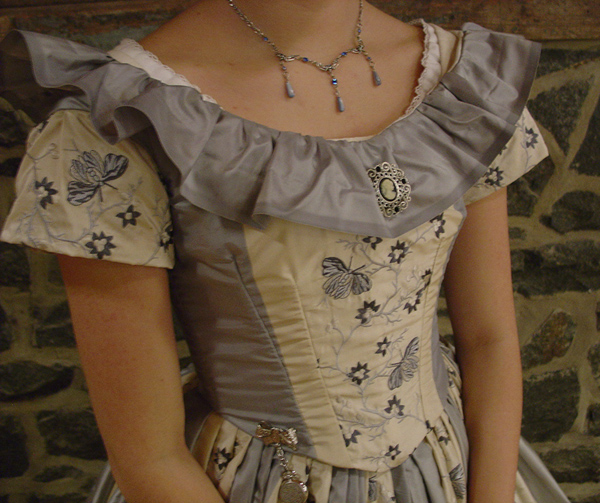
This lovely civil war ball gown brings to life the crinoline era, or early Victorian period.  The pale cerulean blue and cream striped fabric is embroidered with flowers and butterflies in the stripes. This is a silk fabric with rayon embroidery from vintage curtains found at auction, yes, this makes it a real Scarlet O’Hara dress since it is made from curtains. We removed the linings and hooks and recycled them into new curtains. Pale colors were much favored for candlelit ballrooms and by younger ladies. My daughter loves blue, butterflies, and flowers so this fabric was a given for her gown. The bodice is pieced to center the embroidery motif on each side and it is finished with a self fabric bertha proportioned to balance the gown on a small stature. The smooth line of the body emphasizes the small waist with wide shoulders and the width of the hoop.  The bertha, or gathered and ruched section across the neckline, emphasizes the width at the shoulders and creates a lovely self-fabric trim.  This gown is made from silk taffeta and is hand finished to complete the period look.

  • 1860’s Chemise with smocking on the front and tiny cluny lace at the edges
  • Unboned “Sensible Stays” rather than a corset to create shape
  • Ballgown with smaller cup sleeves and self fabric ruffle bertha
  • Machine sewn inner seams
  • Hand finished (hems, edging, hooks and eyes)

civil war blue front civil war blue front detail civil war blue dancing civil war blue dance civil war blue back view

Civil War Ball Gown- Peacock Blue

This lovely civil war ball gown brings to life the crinoline era, or early Victorian period.  The bold peacock blue color of the silk taffeta is contrasted with black lace and flower trim, which was one of many fashion trends from 1860-1865.  The smooth line of the body emphasizes the small waist with wide shoulders and the width of the hoop.  The bertha, or gathered and ruched section across the neckline, emphasizes the width at the shoulders and creates a lovely self-fabric trim.  This gown is made from pure silk taffeta and is hand finished to complete the period look.

The gentleman in pinstripes is my Dad, we modified a modern shirt, wool pants, and wool jacket for him by altering the cut and replacing all of the buttons. I made his vest and cravat to create this dapper civilian impression for the Remembrance Day Ball at Gettysburg.

  • 1860’s Chemise with pin tucks on the front and cluny lace at the edges
  • Pure Silk Taffeta Ball Gown with Self- fabric Bertha and black cluny lace
  • Machine sewn inner seams
  • Hand finished (hems, edging, hooks and eyes)

civil war p blue side view civil war p blue side long civil war p blue front civil war p blue dance civil war p blue alone