Plaited Apron

The plaited or smocked apron is seen during many centuries but turns up a lot during the 16th century in Germany and creates a lovely decorative accessory to show off one’s needlework.  This apron has both smocking at the top and a drawn thread work hem all the way around, entirely hand sewn with linen thread on linen ground.  If you don’t have he patience for this I will be offering this style of apron in my etsy shop but it will be dear as befitting the amount of time that went into this. 🙂

I highly recommend the online tutorials and classes of Genoveva von Lubeck at Germanrenaissance.net for all manner of lovely handwork- she was lucky enough to grow up doing this and now shares it with patience and a love of the art with grateful students around the known world.

plaited-apron-full plaited-apron-smocking plaited-apron-drawn-thread-hem

Historical Sew Monthly

The Challenge: Holes

May 2016

Fabric: 100% linen- handkerchief weight

Pattern: Class instructions from Genoveva von Lubeck, based on historical examples of plaiting and drawn thread work

Year: 16th century

Notions: linen thread

How historically accurate is it? 100% given accurate materials and hand sewn throughout

Hours to complete: 30 hours of handsewing

First worn: September 2016

Total: $20 fabric remnant, notions from stash

Historical inspiration images…
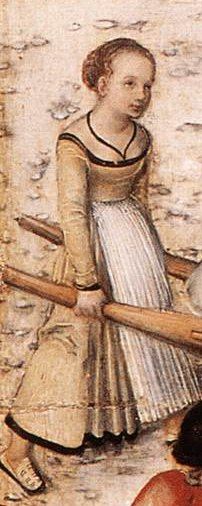
german-1530 drawn-thread-and-smocking  1529-german

Edwardian Bib Apron

Apron FrontApron back

This is a frilly Edwardian Apron, also for the Historically Sew Monthly March 2016 challenge…

The Challenge: Protection- March

Fabric: Cotton Batiste sewn with cotton thread

Pattern: Drafted to look as close to pictures as possible, based off of other aprons for sizing and tried on during construction

Year: 1910’s

Notions: shell buttons for straps under waistband

How historically accurate is it? As close to the picture as I could get along with comparison to other extant garments

Hours to complete: Total: 5   (Cutting and Sewing: 5)

First worn: Work at Steppingstone Farm Museum, May 2016

Total cost: $18   fabric from my stash, buttons and thread unknown

And the inspiration images…

1910 Edwardian Christmas

1910 Edwardian Christmas


1910 cooks dress and apron

1910 cooks dress and apron


1910, White cotton maid's apron hand embroidered with broderie anglais trim

1910, White cotton maid’s apron hand embroidered with broderie anglais trim


1910s canning lesson

1910s canning lesson

Elizabethan Chemise

chemise

This is an Elizabethan Chemise that I finally got around to, pieces were cut out forever so it could have counted for the Jan “procrastination” challenge also, for the Historically Sew Monthly February 2016 challenge… need to get a picture with it on- it wore very well but the camera I thought I got pictures with did not save them 😦

The Challenge: Tucks and Pleats- February

Fabric: Linen, linen thread

Pattern: Drafted from other fitted chemise and shirts that fit me well, pleating set to fit bands

Year: 1530-1600

Notions: cotton twill tape for ties

How historically accurate is it? Appropriate fabrics, construction details from Janet Arnold’s Patterns of Fashion but less fancy- easy care washable plain pleats for this one but still entirely hand sewn with felled seams in linen thread

Hours to complete: Total: 3   (Cutting and Piecing: 1, Hand Sewing:8   Setting Pleats: 1)

First worn: Bright Hills Baronial Birthday, February 13, 2016

Total cost: $24   fabric and supplies from my stash, buttons and thread unknown


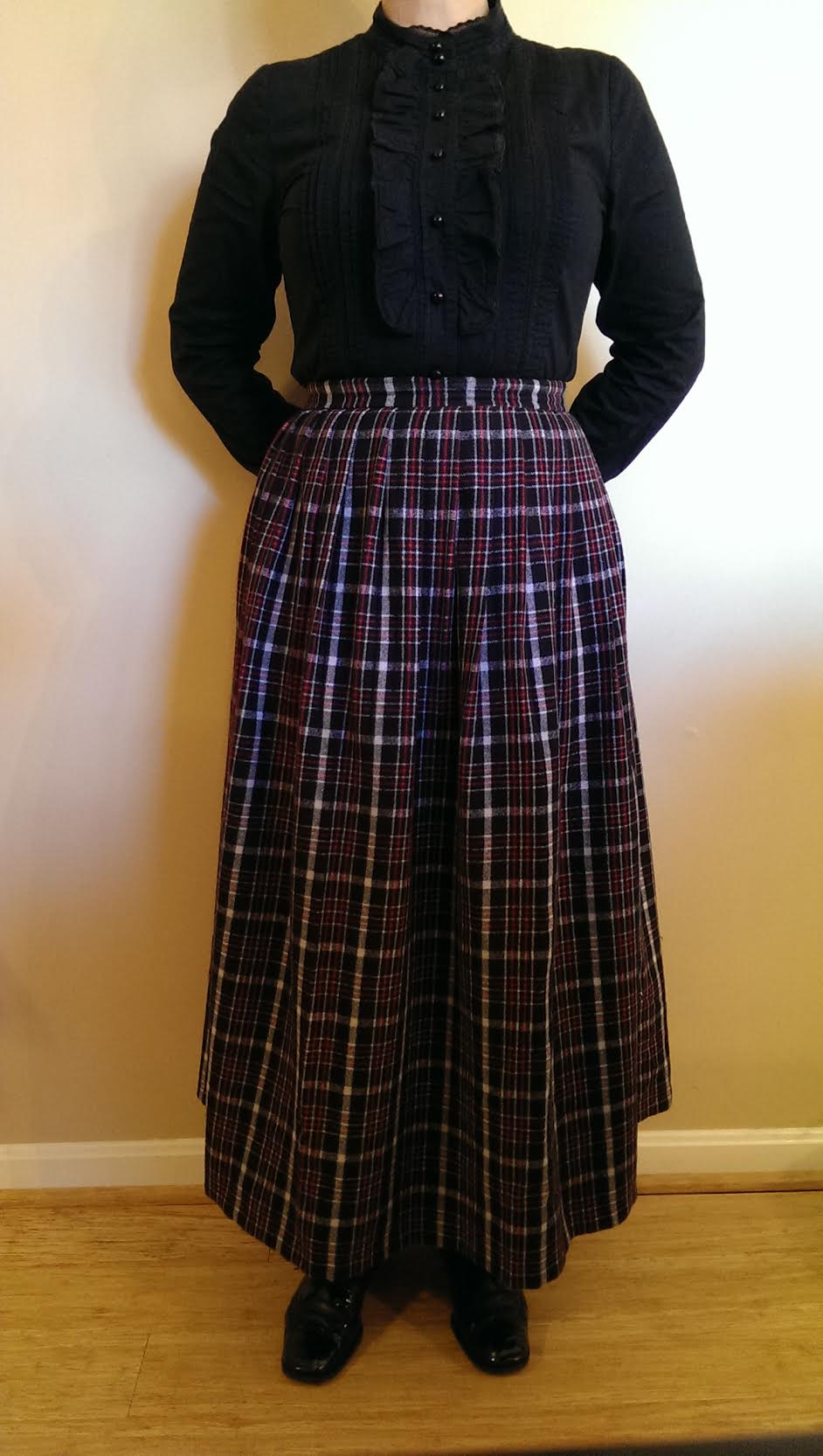
Pleated 1890s skirt

skirt frontskirt back

This is a reproduction piece for the skirt from the “Skating Ensemble” from the Kyoto Museum, also for the Historically Sew Monthly February 2016 challenge…

The Challenge: Tucks and Pleats- February

Fabric: Cotton Chambray plaid, buttonholes sewn with cotton thread

Pattern: Drafted to look as close to picture as possible, pleats set with vinegar to 12″

Year: 1890’s

Notions: metal buttons

How historically accurate is it? As close to the picture as I could get along with comparison to other extant garments

Hours to complete: Total: 3   (Cutting and Sewing: 1, Setting Pleats: 1, Buttonholes: 1)

First worn: Work at Steppingstone Farm Museum, February 12, 2016

Total cost: $28   fabric and supplies from my stash, buttons and thread unknown

And the inspiration image…

Kyoto Institute 1890's Skating Ensemble

Kyoto Institute 1890’s Skating Ensemble

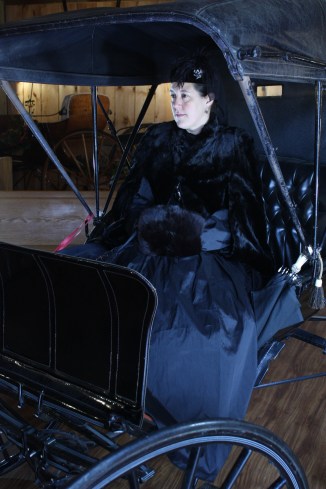
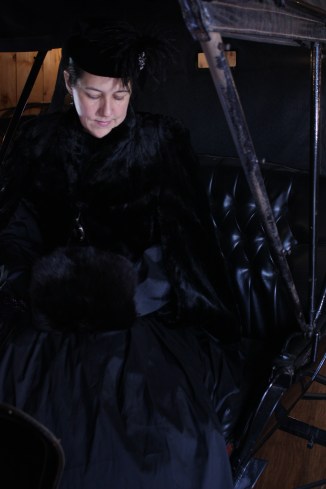
Civil War Mourning Gown

A mourning gown had been on my “to sew” list for many years, but I was motivated to finally get it done to wear to the exhibit opening of “Death Becomes Her” a Victorian Mourning Clothes exhibit at the Metropolitan Museum of Art.  It was done enough to wear there but I am in the process of adding more trimmings and details as I am wont to do…

The smooth line of the fitted bodice emphasizes the small waist with wide shoulders and the width of the hoop.  This effect is emphasized with the cartridge pleated waist.

This gown is made from silk taffeta, self piped,  lined with polished cotton and is hand finished to complete the period look.

  • Mourning gown
  • Machine sewn inner seams
  • Hand finished (hems, edging, hooks and eyes)
mourning back

Photography by Drew Harting

mourning carriage

Photography by Drew Harting

IMG_0161

Photography by Drew Harting

Orange Rain Cloak

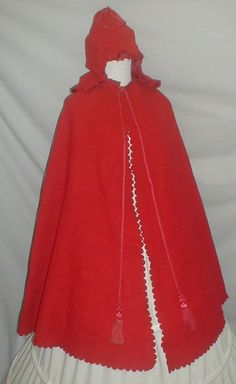
A rain cloak that reminds me of sunsets and orange sherbet and also for the Historically Sew Monthly  January Challenge… Procrastination

This project started many years ago when I started saying “I need a rain cloak” then grew a few years back when I started attending Pennsic where it can be in the 90’s and raining and I am often caught out with armfuls of shopping when I say “I really need a rain cloak big enough to cover all this and not hot” which led me to a friend who had brilliantly made hoods our of waterproof cotton.  So, I went hunting for waterproofed cotton which took me a while to find and when I did it was orange, a nice orange but orange none the less.  I was afraid to over dye it because I didn’t know how it would effect the waterproofing.  Then, last year I finally had enough of the rain and made a point of cutting it out, which sat around for a year.  Then, I machine sewed the pieces together in time for Pennsic this past year because it was supposed to have torrential rain but ended up having none, probably because I came prepared with something I could wear to keep me dry even if it wasn’t finished.

I foolishly decided to hand finish this, I say foolish because it took forever and required 2 thimbles to sew due to the tight weave of the fabric.  Some of you have seen me wearing this and sewing the hem as I wore it on a rainy day… but it kept getting pushed aside for proper clothing, historical clothing that I could get excited about.  So, this last weekend when I got back on the wagon for the Historical Sew Monthly and saw that the challenge was procrastination I figured the bit of orange peeking out at me from the finishing pile in the sewing room was fair game, it has been many years/months in the making so as we put on several movies and I armed my fingers I finished the last of the long, long, long hem, decided to add some soft boning in the hem of the hood, and then decided to throw out the idea of hand flat felling all the interior seams in favor of binding them by machine with bias tape- which I had in a very close orange color in the stash inherited from my mother in law, along with one large orangey mother of pearl button.  Voila!   The beast is done, is not as historical as I would like but it will keep me and whatever I choose to carry or several friends dry.  I promise another procrastinated project for the February pleats challenge and a proper historical piece for the March protection challenge. 🙂

orange sherbet cloak

The Challenge: Procrastination

January 2016

Fabric: 100% cotton waterproofed trench material

Pattern: Vogue shaped shoulder cloak

Year: 19th century with shaped shoulders

Notions: bias tape bindings, shell button

How historically accurate is it? The shape and purpose are accurate but a modern practical compromise of waterproofed cotton rather than oilcloth

Hours to complete: Total: 20  (Cutting: 1, Sewing: 2, Hand finishing: 8)

First worn: Unfinished Aug-Oct 2015, finished January 2016

Total: $48 fabric, notions from inherited stash


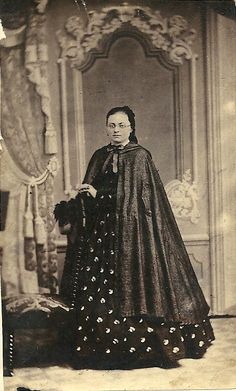
Historical inspiration images…

Civil War full length cloak with fitted shoulders.

Civil War full length cloak with fitted shoulders.

Civil War full length cloak with fitted shoulders and single closure at neck.

Civil War full length cloak with fitted shoulders and single closure at neck.

Civil War long cloak with fitted shoulders and hood.

Civil War long cloak with fitted shoulders and hood.

orange silk cloak 18th c

Orange! 18th Century cloak with hood

Orange! with awesome decorations...

Orange! with awesome decorations…

Regency Peacock Blue

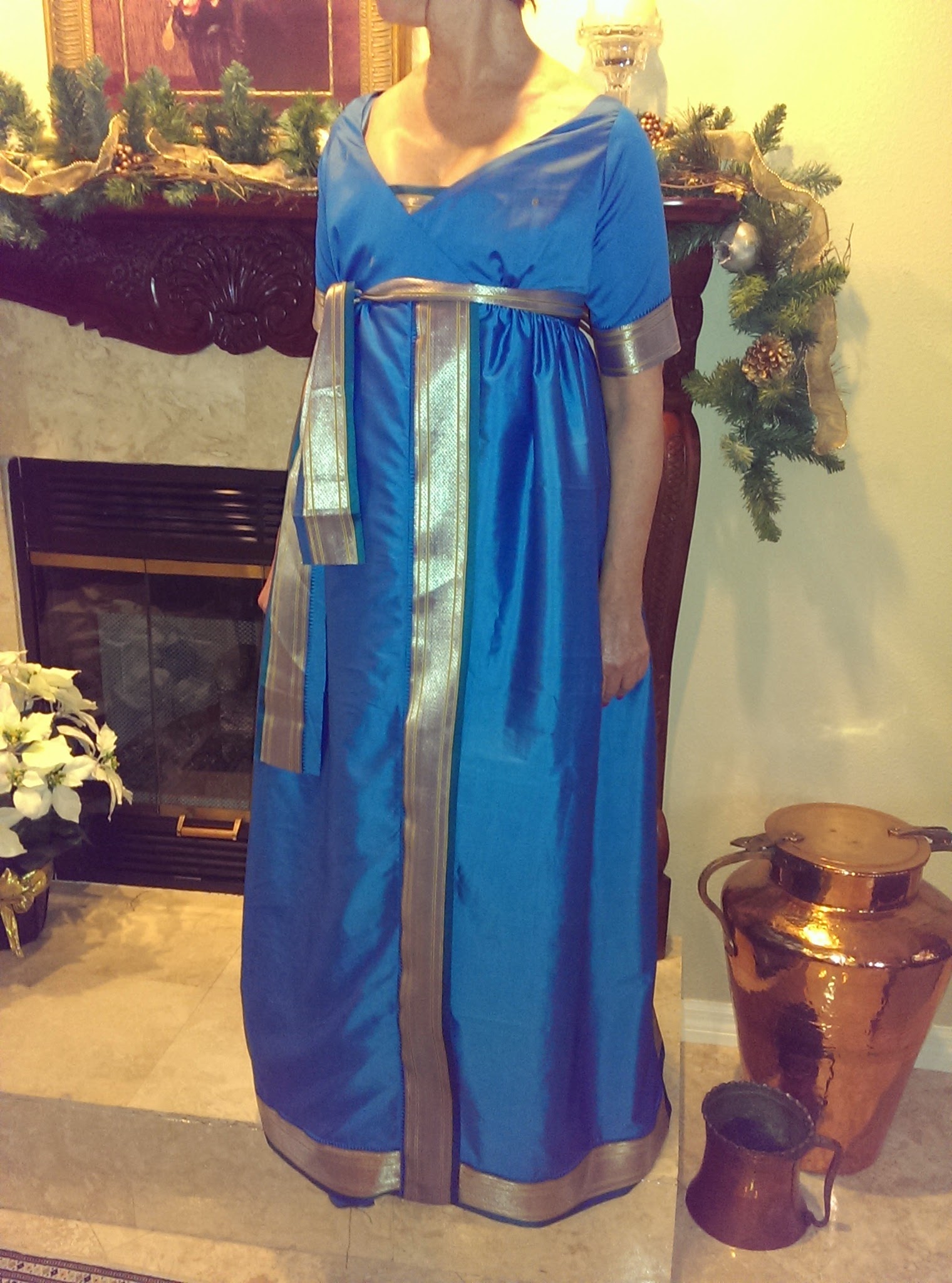
full view Peacock Blue Regency gown

full view Peacock Blue Regency gown

image image image image image

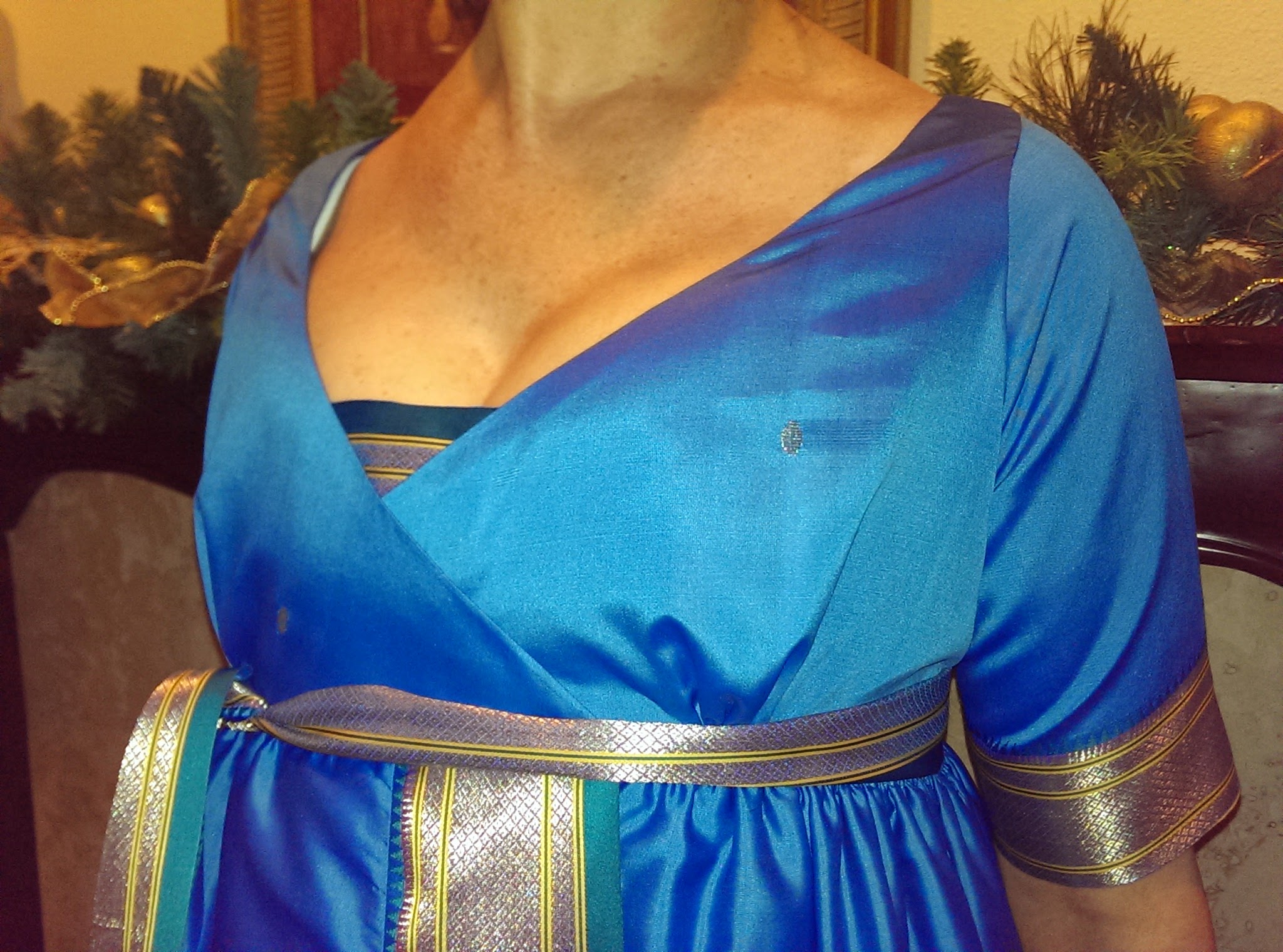
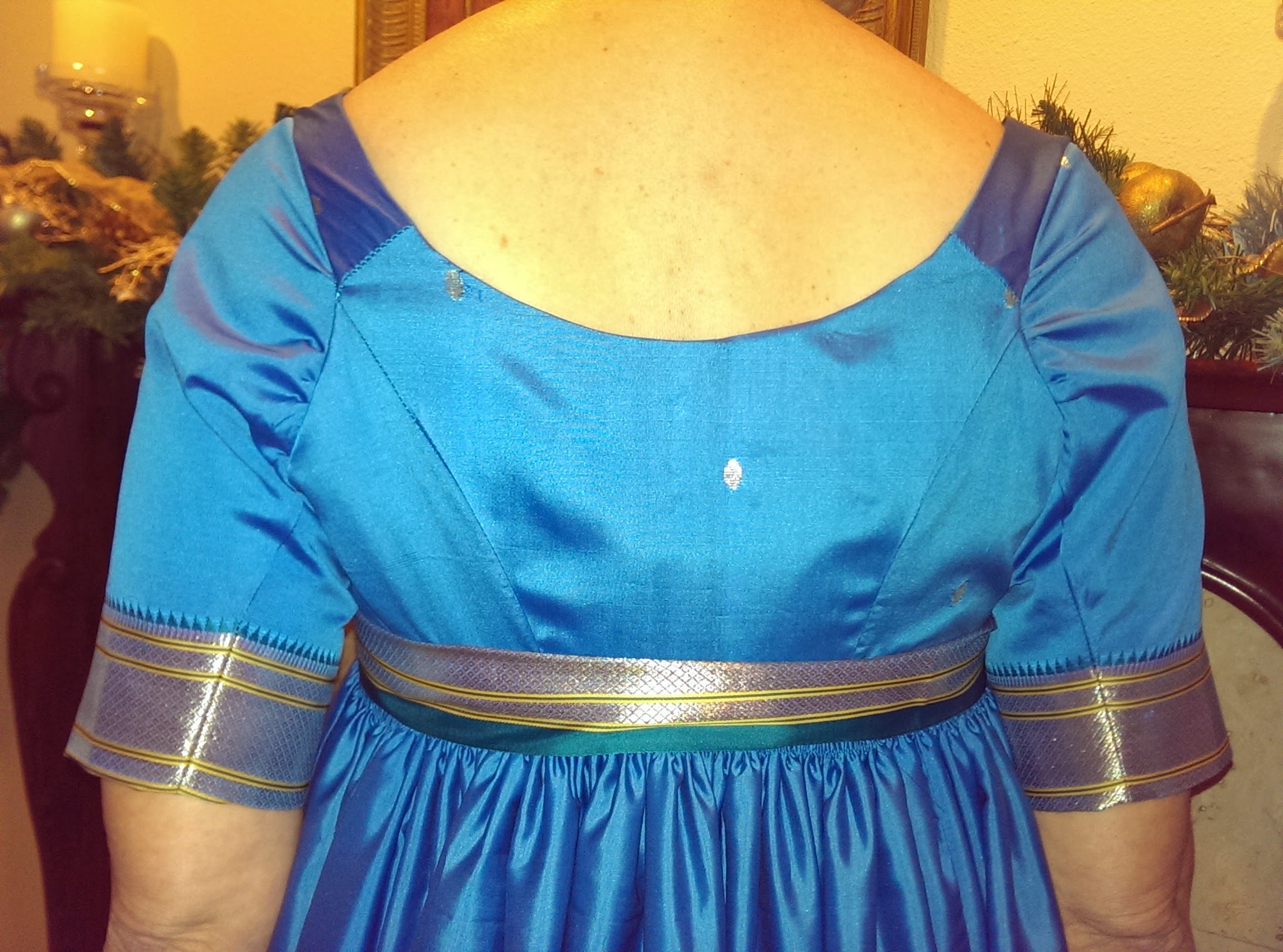
A Peacock Blue Regency ball gown made from a vintage silk sari, created for my mom who does English country dancing and also for the Historically Sew Monthly  February Challenge… Something Blue

The Challenge: Something Blue

February

Fabric: Vintage silk sari with metallic trim and wooden in dots, lined with cotton

Pattern: crossover bodice modified from sense and sensibility pattern, sleeves cut down to above elbow

Year: 1800

Notions: sash of extra sari border,  turban of pallu piece 

How historically accurate is it? As close to period plates and extant gowns as possible while working around the sari weave and the firing of the gown

Hours to complete: Total: 20  (Cutting and fitting: 3, Sewing: 15, Hand finishing: 2)

First worn: B, February 10, 2015

Total: $45 vintage silk sari $25, cotton lining $20, thread ?

And the few construction pics that I took…

Historical inspiration images…

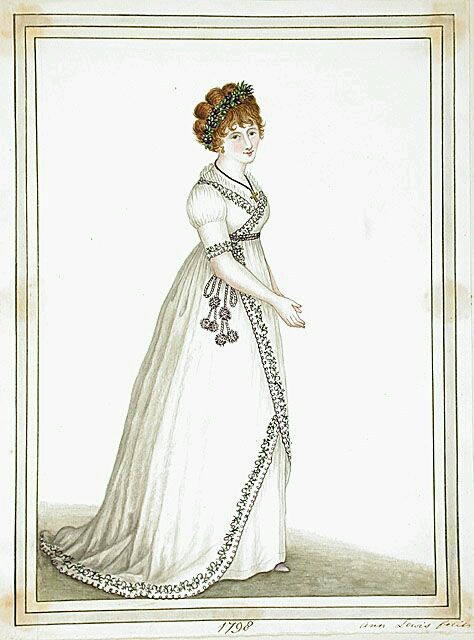
Fashion plate

Fashion plate

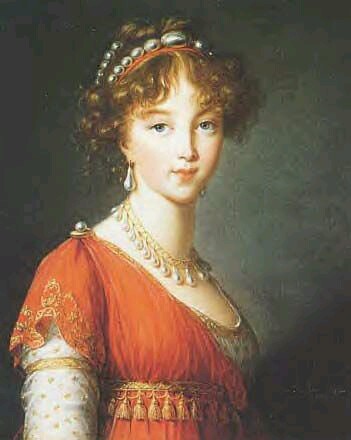
Princess Maria Louisa Auguste of baden Empress Elisabeth Alexeievna Elizabeth Alexeievna (13/24 January 1779 - 4 May/16 May, 1826) was the wife of emperor Alexander I of Russia.

Princess Maria Louisa Auguste of baden Empress Elisabeth Alexeievna Elizabeth Alexeievna (13/24 January 1779 – 4 May/16 May, 1826) was the wife of emperor Alexander I of Russia.

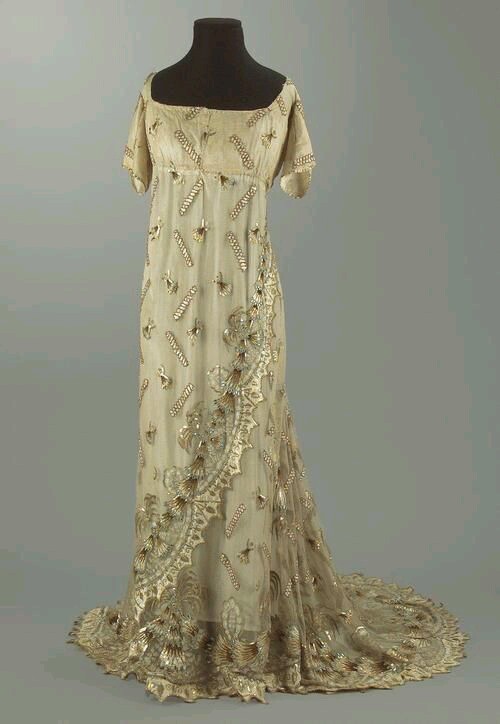
Left: English dress and petticoat, c. 1790- 95, Center: French round gown, c. 1790-5 both held by the Kyoto Costume Institute, Right: India, dress of Lady Chambers of Calcutta, c. 1795-1800, property of Martin Kamer.

Left: English dress and petticoat, c. 1790- 95, Center: French round gown, c. 1790-5 both held by the Kyoto Costume Institute, Right: India, dress of Lady Chambers of Calcutta, c. 1795-1800, property of Martin Kamer.

1810

1810

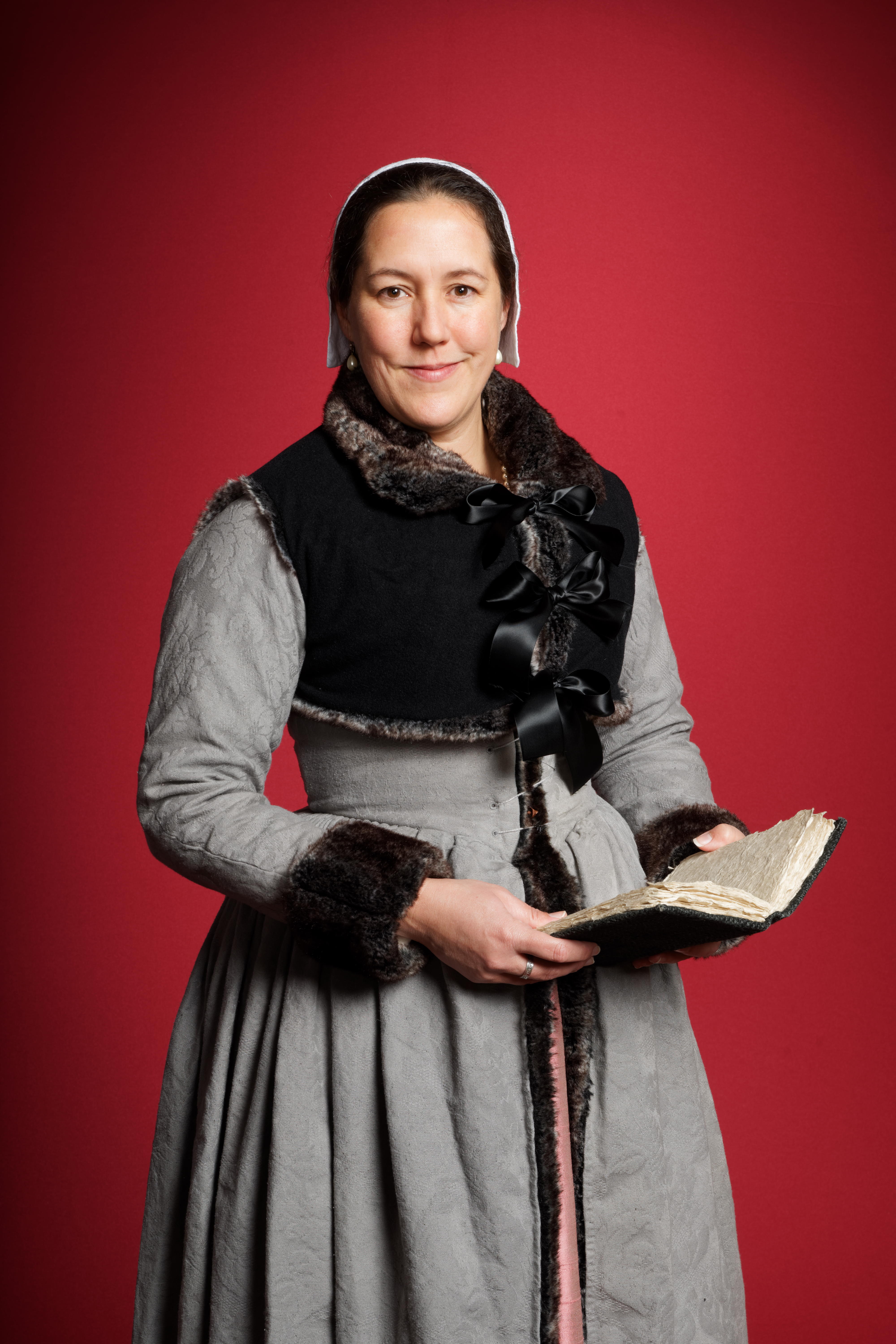
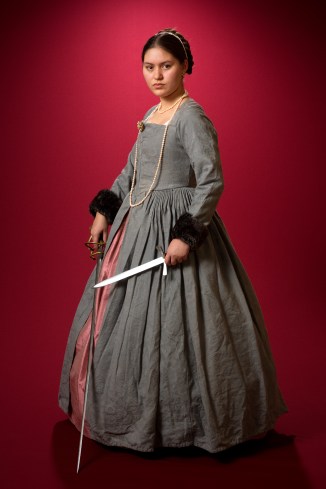
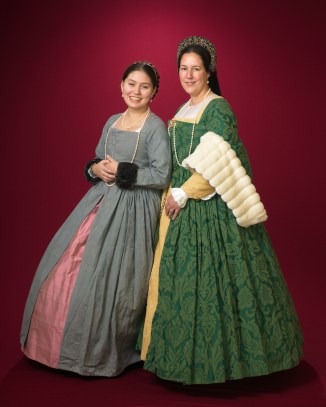
1510 Tudor Gown Grey

Period Correct Clothing to Fit Your Style… 
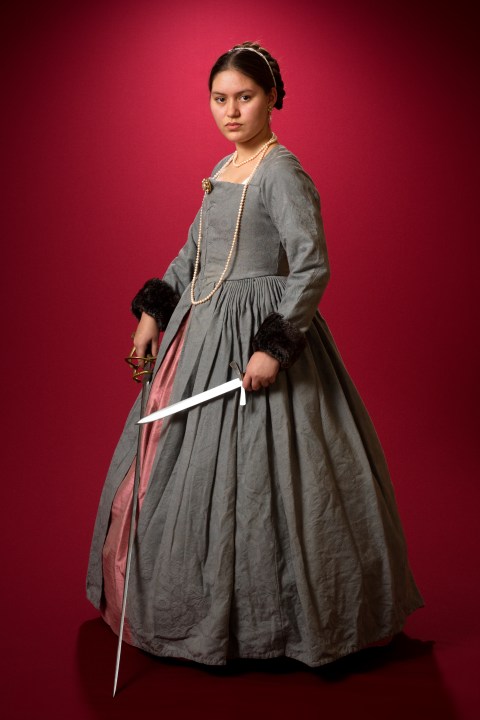
  • Tudor Gown of cotton jacquard and faux fur
  • Cotton twill lining
  • Petticoat of shot silk
  • Machine sewn inner seams
  • Hand finished (hems, edging, and eyelets)
  • Cotton was used for comfort and washability- this gets worn when it is much hotter than old England
  • Minimal boning in open channels so it can be removed for machine washing
  • This project was a less formal Tudor Gown I made with patterns drafted by combining the Tudor Tailor underkirtle and my body block
  • This is one project for my A&S 50 Challenge, 50 things from my stash, since all the fabrics aside from the fur were already in my stash…
  • 2017 Update- I added fur trim all around (tacked on for washing) and made a fur lined wool partlet which I LOVE- so soft and snuggly!

Photo updates:

Photo by Baron Bardulf Rauen

Photo by Baron Bardulf Rauen

Photo by Baron Bardulf Rauen

Photo by Baron Bardulf Rauen

Grey Tudor with swords

Photography by Baron Bardulf Rauen

Tudor gowns

Photography by Baron Bardulf Rauen

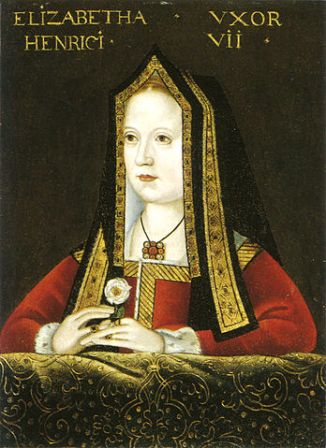
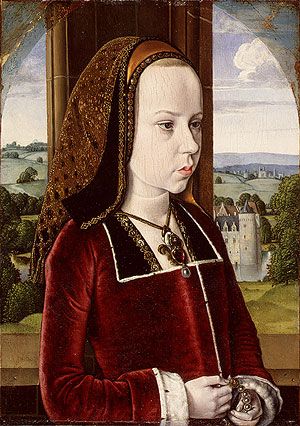
Inspiration for early Tudor Gown with narrow fur cuff sleeves-

1500-Elizabeth_of_York_from_Kings_and_Queens_of_England

1500 Elizabeth of York

Jean Hey (Master of Moulins). Portrait of Margaret of Austria

Jean Hey (Master of Moulins). Portrait of Margaret of Austria

Inspiration for fur lined partlet-

c1550-ladies-wearing-outdoor-clothing-of-brown-and-black-kirtles-and-fur-lined-surcoats

c1550-ladies-wearing-outdoor-clothing-of-brown-and-black-kirtles-and-fur-lined-surcoats

fur-partlet full coverage

fur-partlet full coverage

st-barbara-wings-of-tryptich-by-master-of-frankfurt-1510-1520

st-barbara-wings-of-tryptich-by-master-of-frankfurt-1510-1520

Venetian 1500 Gamurra

cropped-DSC02182a.jpg 

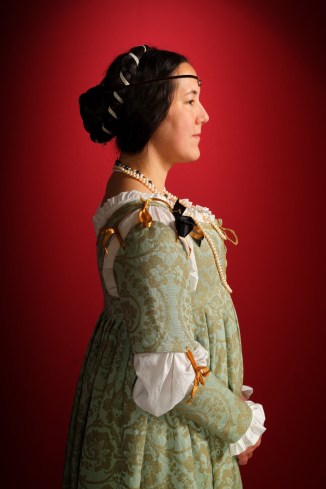
Portrait profile

Photography by Baron Bardulf Rauen

This is my new undergown for 1500 Venetian, created for Atlantian Twelfth Night and also for the Historically Sew Monthly January challenge…

The Challenge: Foundations- January

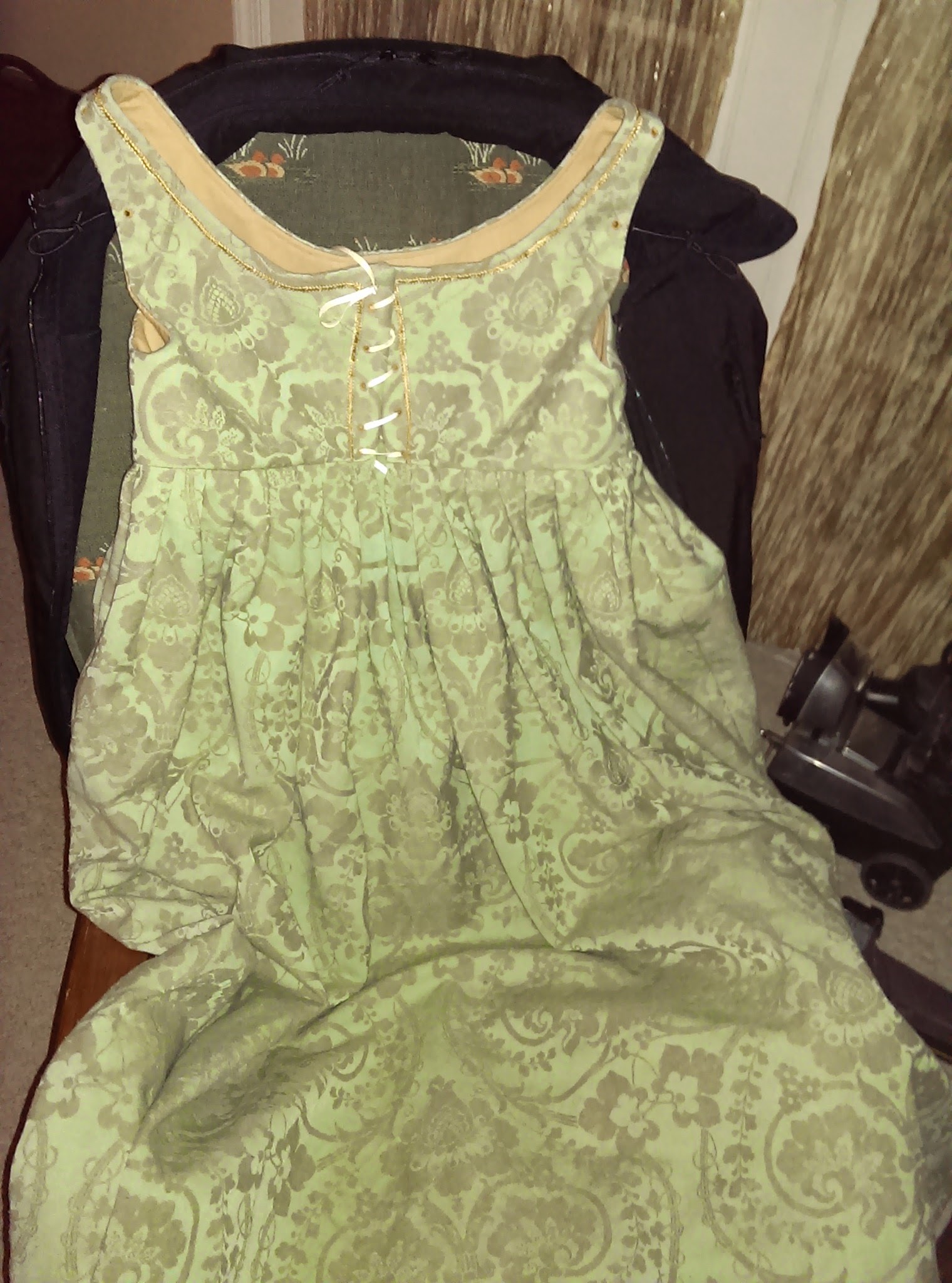
Fabric: Chemise of cotton voile, Gamurra of green and gold jacquard linen and rayon blend, bodice lined in 2 layers of cotton canvas, eyelets sewn with linen thread

Pattern: Drafted and refitted from my fitted body block to an under bust bodice, sleeves cut down from my sleeve sloper

Year: 1500 venice

Notions: gold braid trim,  gold ribbons (replacing now with silk and points), black ribbon for mourning, luceted lacing cord 

How historically accurate is it? As close to the portraits as I could get with little evidence from extant garments other than chemises, each decision regarding construction and cut were done after comparing multiple images,  my neckline is not quite as broad but that was based on coverage and support needed in the bodice which is unboned but is the foundation garment

Hours to complete: Total: 32   (Cutting and fitting: 6, Sewing: 12, Eyelets: 14)

First worn: Atlantian Kingdom Twelfth Night, January 10, 2015

Total cost:$102   fabric and supplies from my stash other than new silk ribbon and aigrets just acquired to add on,  estimate $24 voile, $48 linen blend jacquard (yay for half price remnant bin), trim and thread unknown,  when added $26 silk ribbons and $4 aiglets

venetian full length left

Photography by Baron Bardulf Rauen

And the few construction pics that I took…

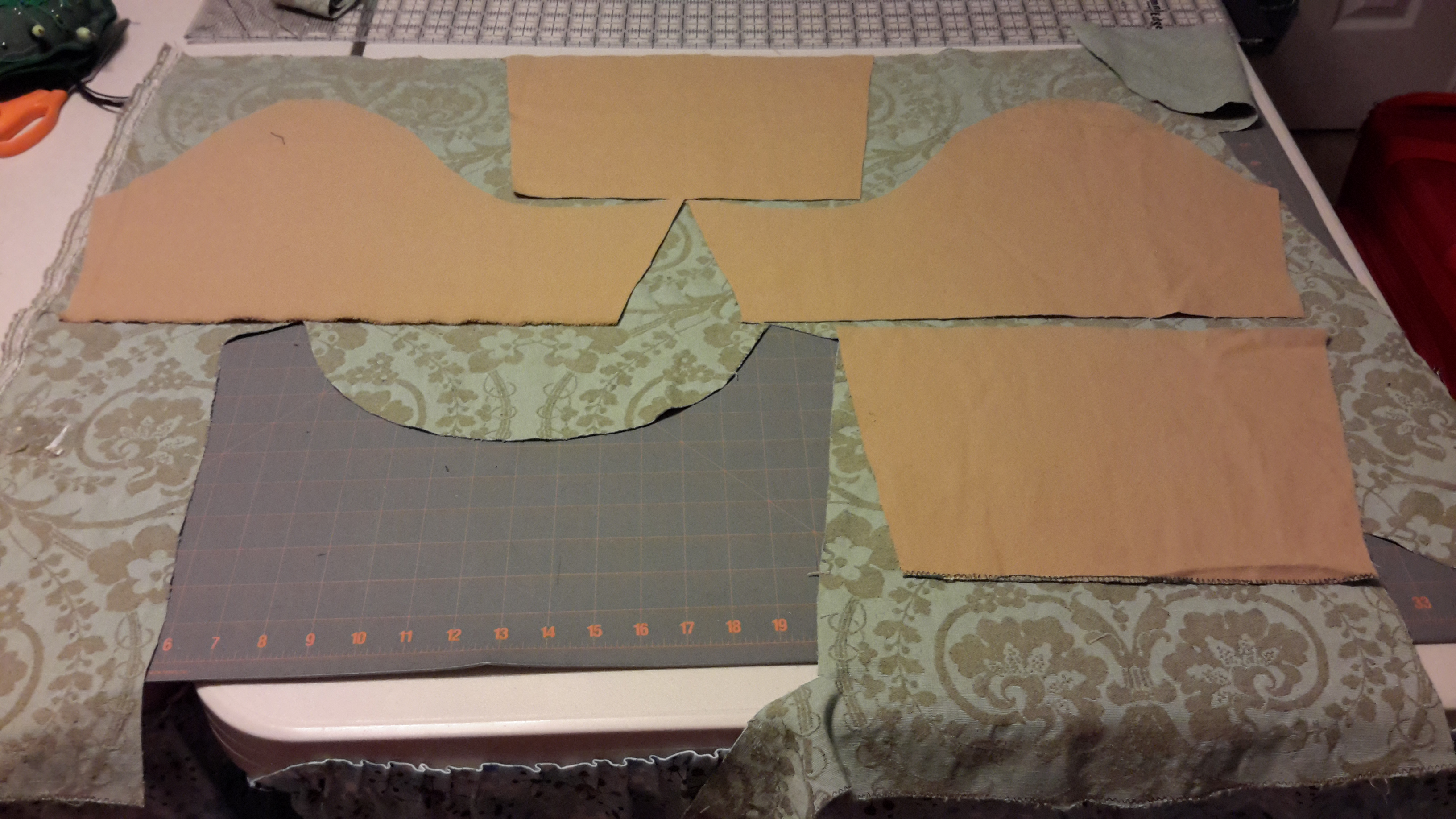
Cutting out sleeves after bodice back got a centered motif

Cutting out sleeves after bodice back got a centered motif

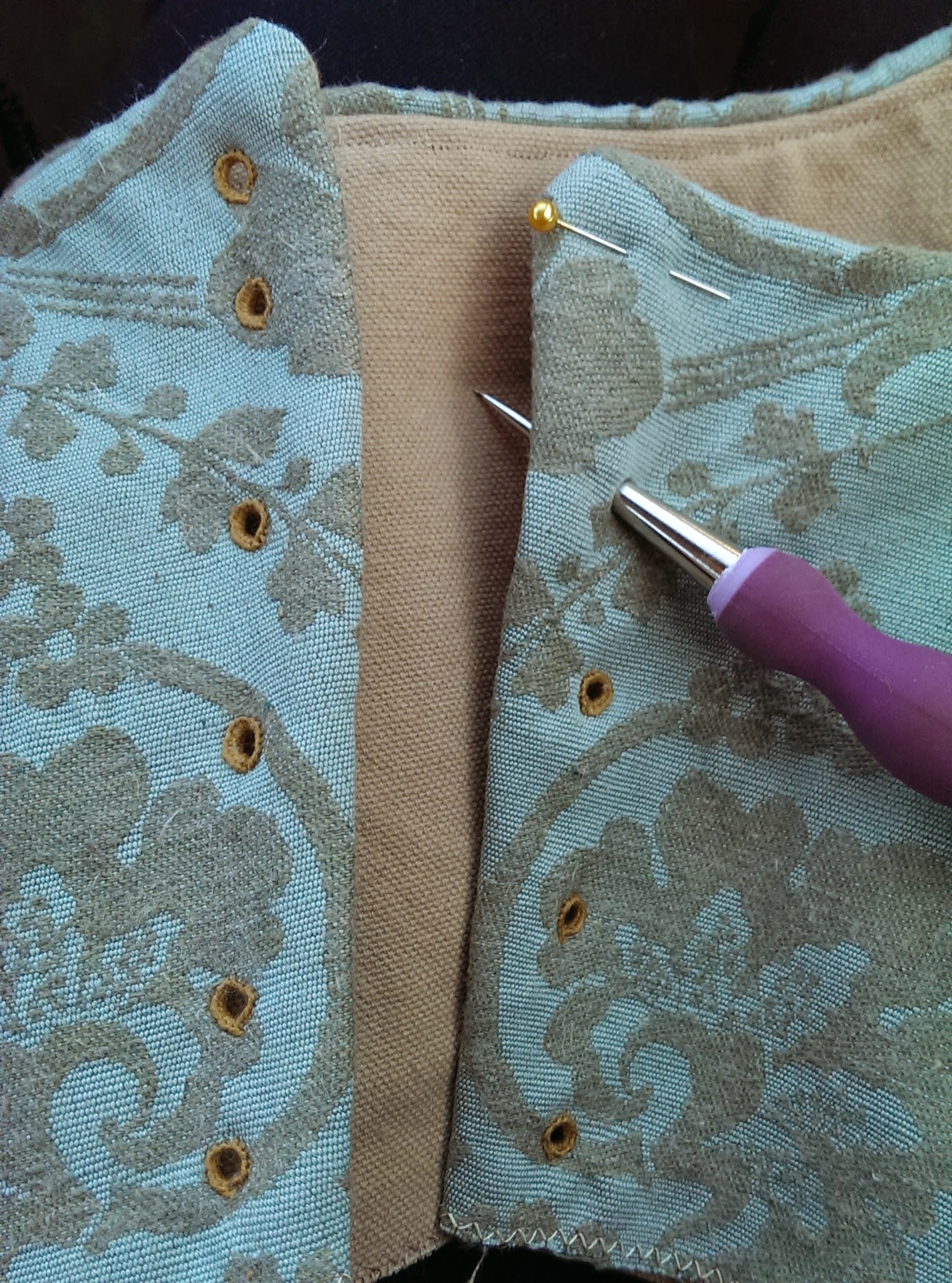
Creating eyelets on bodice

Creating eyelets on bodice

Closer view of eyelet construction

Closer view of eyelet construction

Trim and shoulder eyelets

Trim and shoulder eyelets

First stage done, time to finish sleeves

First stage done, time to finish sleeves

And the inspiration images:

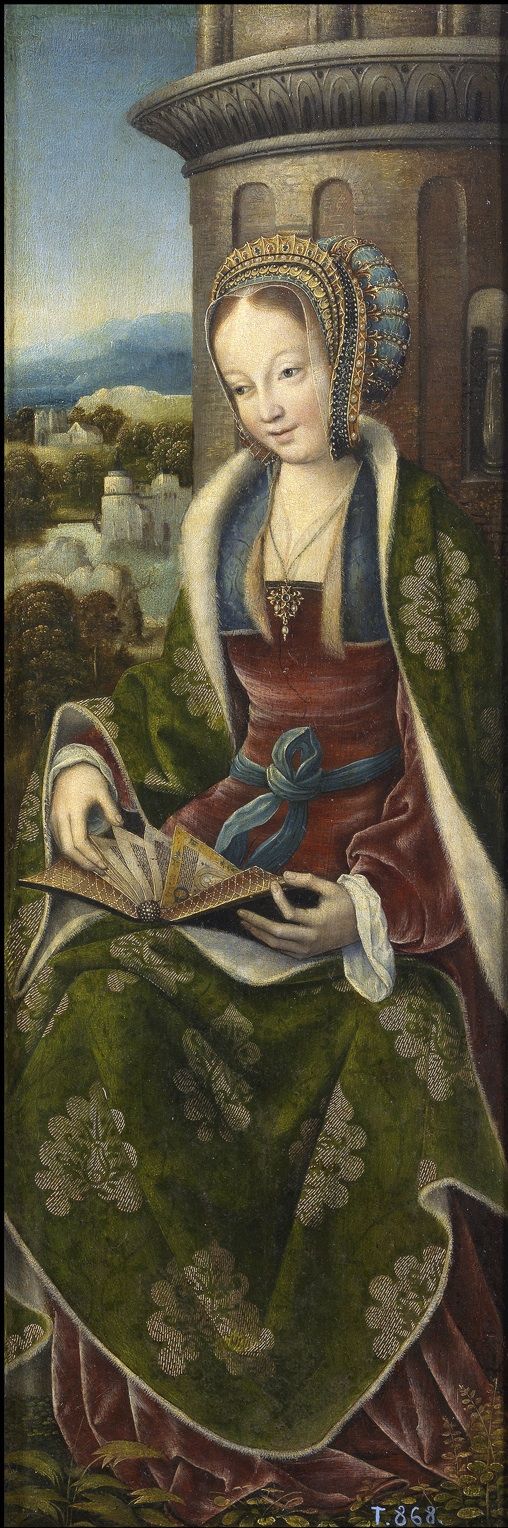
Squared neckline but higher than some, love the ribbon detail and the black ribbon for mourning, her necklace also inspired one of mine

young venetian woman Durer

Photography by Baron Bardulf Rauen

Squared neckline and more ribbon and sleeve detail, fine gold work on edge of chemise

Supposed portrait of Bianca Sforza,an illegitimate daughter of Lodovico il Moro,c.1500

Photography by Baron Bardulf Rauen

Squared neckline with longer bodice, could be front closing with ribbon ties as on sleeves, looped and draped necklace, headband with stone

Leonardo da Vinci, La Belle Ferroniere, 1490.

Leonardo da Vinci, La Belle Ferroniere, 1490.

Ludovica Tornabuoni, by Domenico Ghirlandaio

Photography by Baron Bardulf Rauen

Rounded neckline with short bodice, both layers front closing, undergown closing edge to edge, overgown closing in wide V to show undergown, interesting partially sewn sleeves on overgown


Civil War Ball Gown- Green & Gold

Photography by Drew Harting

Photography by Drew Harting

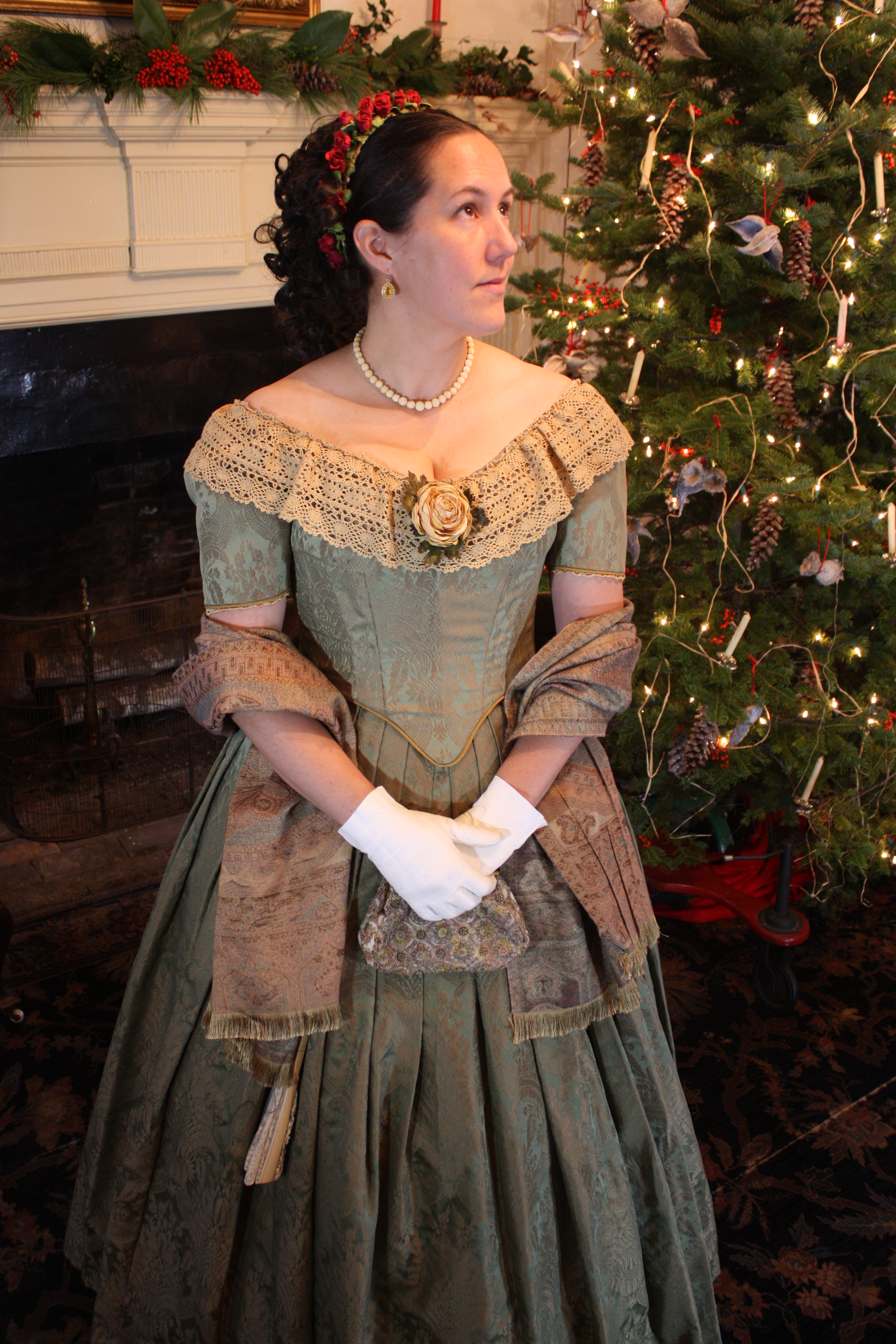
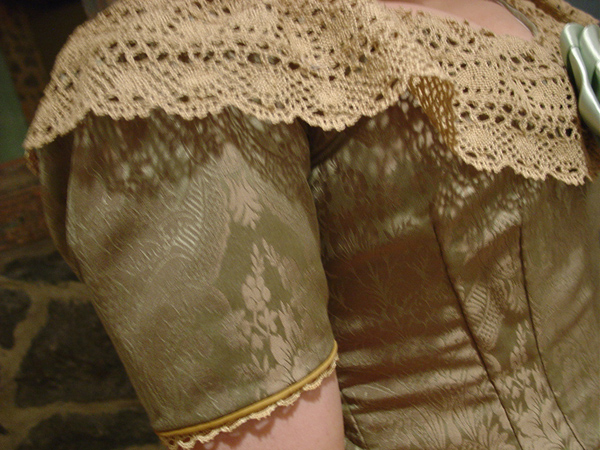
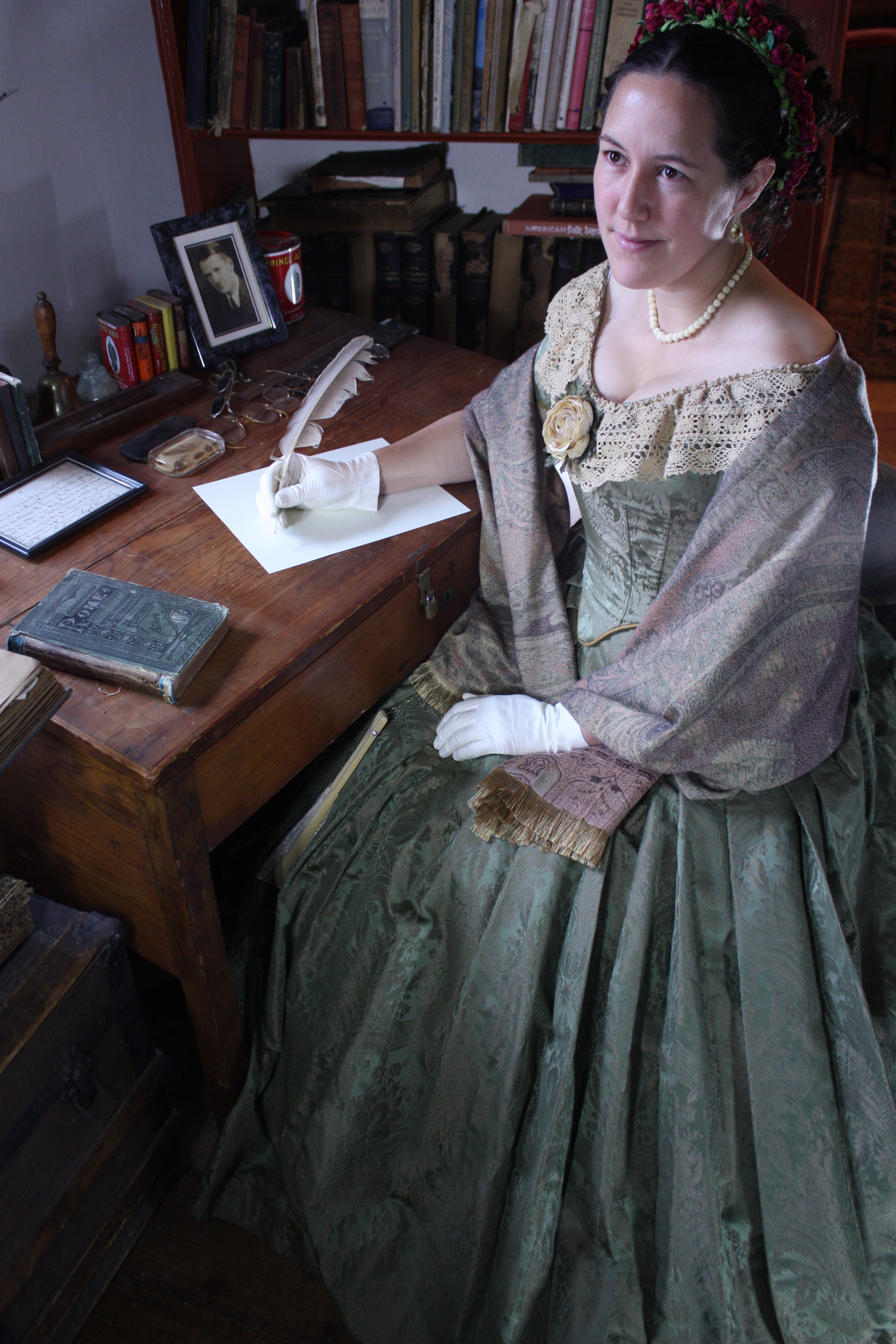
This richly colored civil war ball gown brings to life the crinoline era, or early Victorian period.  The rich moss green and gold damask is complimented with antique gold lace and piping, which was inspired by a gown from 1860 in the Kyoto museum.  The smooth line of the body emphasizes the small waist with wide shoulders and the width of the hoop.  The bertha, or lightly gathered lace section across the neckline, emphasizes the width at the shoulders and creates a lovely frame for the face.  The antique gold piping pulls out the gold color but also reinforces the bodice and arm edges while being decorative. Piping was a very popular decorative and reinforcement element in the civil war period. This gown is made from a modern rayon and polyester blend, but it was used because of the original gown it called to mind and because with bulk of the fiber being rayon, man-made but still a natural fiber content, it remains comfortable while having the right drape of heavy silks. When I saw this fabric, it reminded me of a gown in my Kyoto book and by replacing the white with gold I used the original gown as inspiration and guidance in shaping and trimming this gown. I have since replaced the rose with a gold silk rose to better match the original.

  • 1860’s Chemise with pin tucks on the front and tiny cluny lace at the edges
  • Corset, hoops, and petticoats to create shape
  • Smooth bodice with lace bertha, piping, and cluny lace at sleeve edges
  • Machine sewn inner seams
  • Hand finished (hems, edging, lace casings)

civil green sleeve detailcropped-IMG_0005.jpg

civil green inspiration civil green front

Photography by Drew Harting

Photography by Drew Harting

Photography by Drew Harting

Photography by Drew Harting

civil green and blue