Elizabethan Chemise

chemise

This is an Elizabethan Chemise that I finally got around to, pieces were cut out forever so it could have counted for the Jan “procrastination” challenge also, for the Historically Sew Monthly February 2016 challenge… need to get a picture with it on- it wore very well but the camera I thought I got pictures with did not save them 😦

The Challenge: Tucks and Pleats- February

Fabric: Linen, linen thread

Pattern: Drafted from other fitted chemise and shirts that fit me well, pleating set to fit bands

Year: 1530-1600

Notions: cotton twill tape for ties

How historically accurate is it? Appropriate fabrics, construction details from Janet Arnold’s Patterns of Fashion but less fancy- easy care washable plain pleats for this one but still entirely hand sewn with felled seams in linen thread

Hours to complete: Total: 3   (Cutting and Piecing: 1, Hand Sewing:8   Setting Pleats: 1)

First worn: Bright Hills Baronial Birthday, February 13, 2016

Total cost: $24   fabric and supplies from my stash, buttons and thread unknown


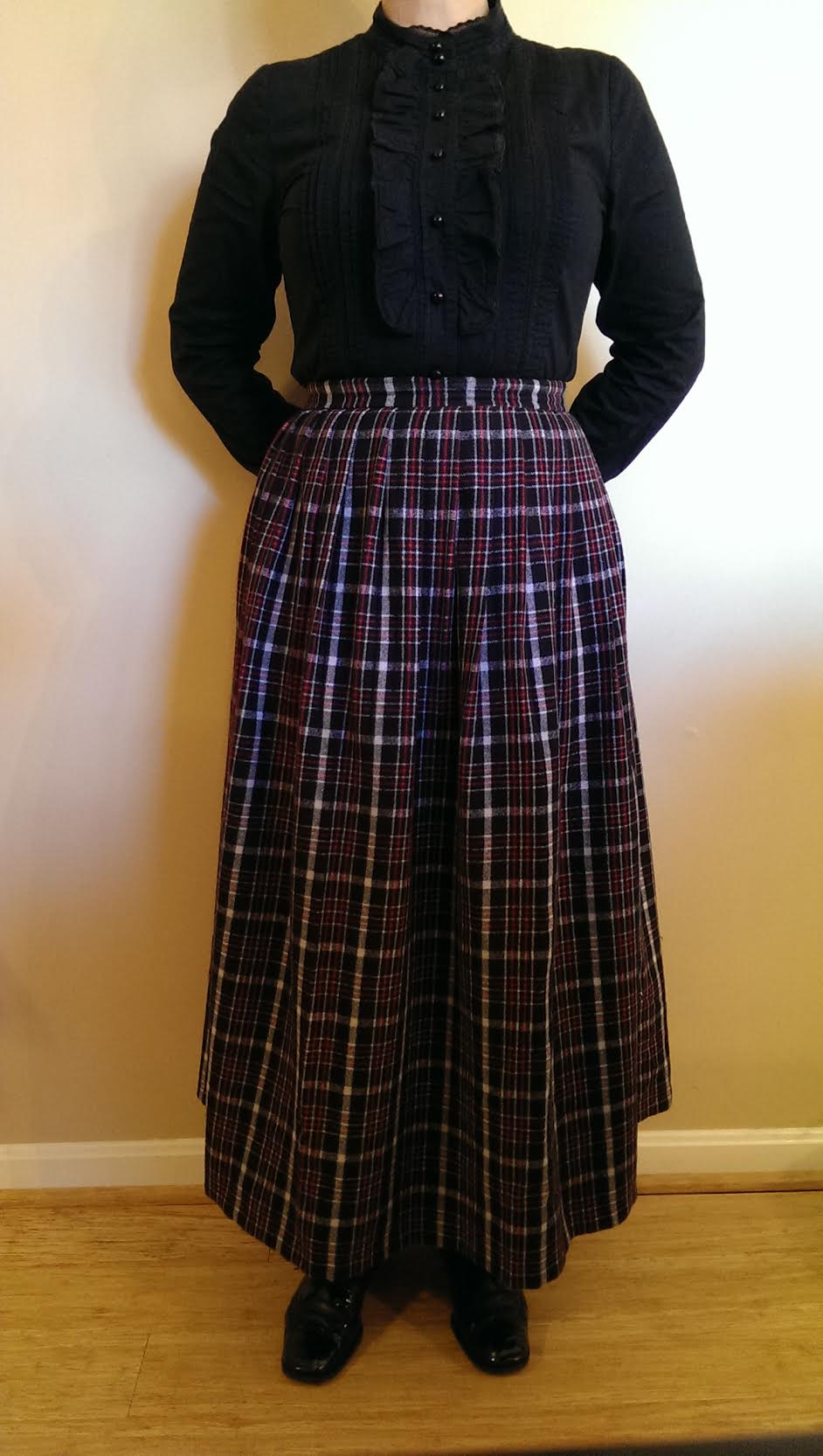
Pleated 1890s skirt

skirt frontskirt back

This is a reproduction piece for the skirt from the “Skating Ensemble” from the Kyoto Museum, also for the Historically Sew Monthly February 2016 challenge…

The Challenge: Tucks and Pleats- February

Fabric: Cotton Chambray plaid, buttonholes sewn with cotton thread

Pattern: Drafted to look as close to picture as possible, pleats set with vinegar to 12″

Year: 1890’s

Notions: metal buttons

How historically accurate is it? As close to the picture as I could get along with comparison to other extant garments

Hours to complete: Total: 3   (Cutting and Sewing: 1, Setting Pleats: 1, Buttonholes: 1)

First worn: Work at Steppingstone Farm Museum, February 12, 2016

Total cost: $28   fabric and supplies from my stash, buttons and thread unknown

And the inspiration image…

Kyoto Institute 1890's Skating Ensemble

Kyoto Institute 1890’s Skating Ensemble

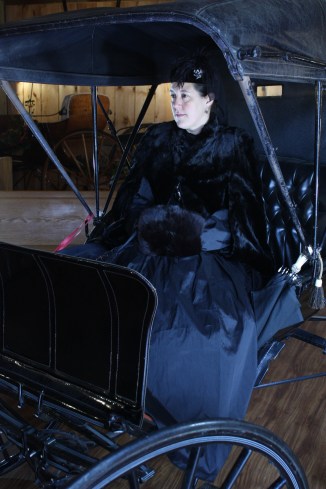
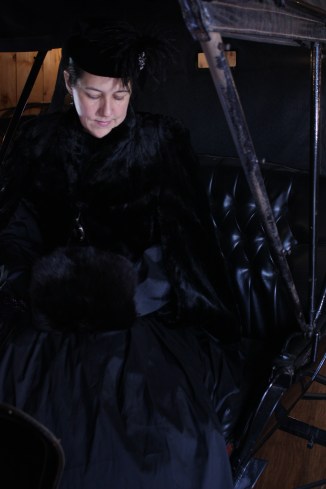
Civil War Mourning Gown

A mourning gown had been on my “to sew” list for many years, but I was motivated to finally get it done to wear to the exhibit opening of “Death Becomes Her” a Victorian Mourning Clothes exhibit at the Metropolitan Museum of Art.  It was done enough to wear there but I am in the process of adding more trimmings and details as I am wont to do…

The smooth line of the fitted bodice emphasizes the small waist with wide shoulders and the width of the hoop.  This effect is emphasized with the cartridge pleated waist.

This gown is made from silk taffeta, self piped,  lined with polished cotton and is hand finished to complete the period look.

  • Mourning gown
  • Machine sewn inner seams
  • Hand finished (hems, edging, hooks and eyes)
mourning back

Photography by Drew Harting

mourning carriage

Photography by Drew Harting

IMG_0161

Photography by Drew Harting

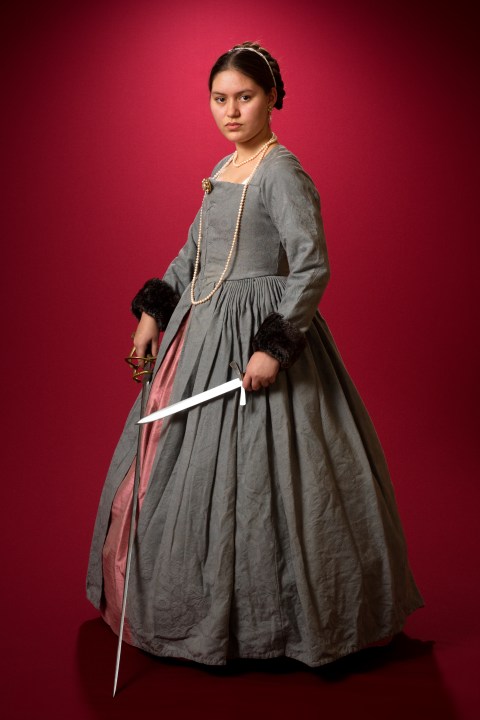
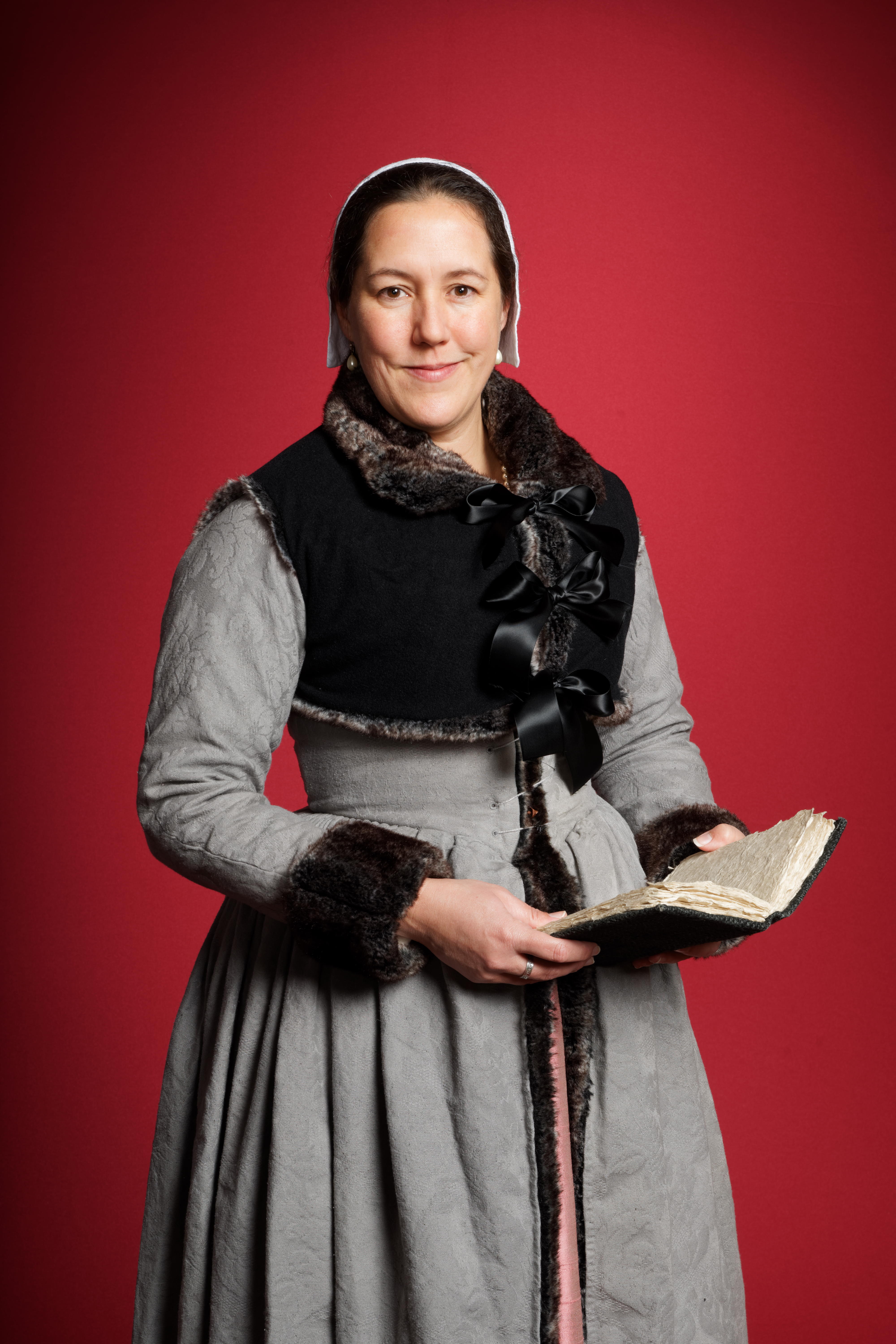
1510 Tudor Gown Grey

Period Correct Clothing to Fit Your Style… 

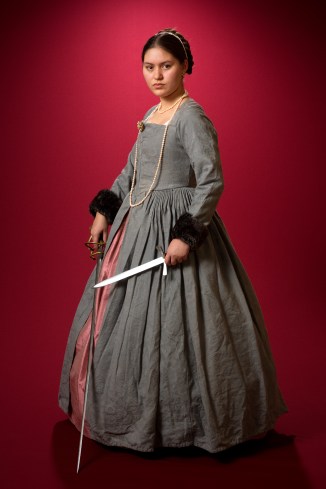
  • Tudor Gown of cotton jacquard and faux fur
  • Cotton twill lining
  • Petticoat of shot silk
  • Machine sewn inner seams
  • Hand finished (hems, edging, and eyelets)
  • Cotton was used for comfort and washability- this gets worn when it is much hotter than old England
  • Minimal boning in open channels so it can be removed for machine washing
  • This project was a less formal Tudor Gown I made with patterns drafted by combining the Tudor Tailor underkirtle and my body block
  • This is one project for my A&S 50 Challenge, 50 things from my stash, since all the fabrics aside from the fur were already in my stash…
  • 2017 Update- I added fur trim all around (tacked on for washing) and made a fur lined wool partlet which I LOVE- so soft and snuggly!

Photo updates:

Photo by Baron Bardulf Rauen

Photo by Baron Bardulf Rauen

Photo by Baron Bardulf Rauen

Photo by Baron Bardulf Rauen

Grey Tudor with swords

Photography by Baron Bardulf Rauen

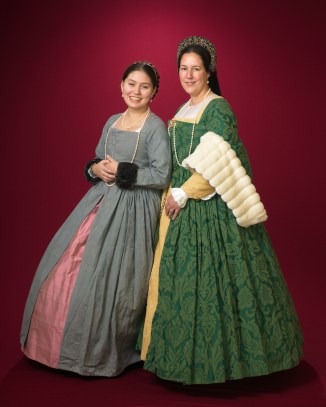
Tudor gowns

Photography by Baron Bardulf Rauen

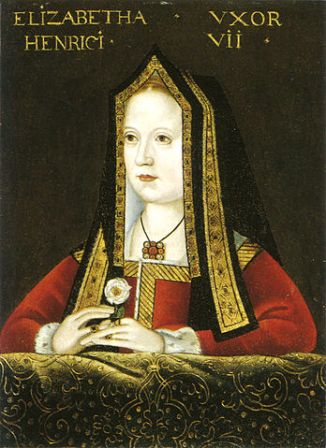
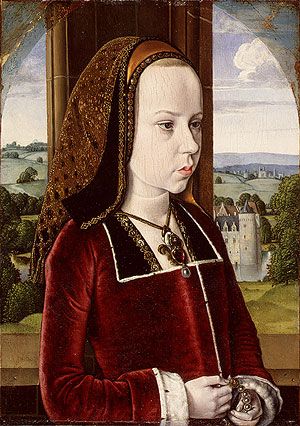
Inspiration for early Tudor Gown with narrow fur cuff sleeves-

1500-Elizabeth_of_York_from_Kings_and_Queens_of_England

1500 Elizabeth of York

Jean Hey (Master of Moulins). Portrait of Margaret of Austria

Jean Hey (Master of Moulins). Portrait of Margaret of Austria

Inspiration for fur lined partlet-

c1550-ladies-wearing-outdoor-clothing-of-brown-and-black-kirtles-and-fur-lined-surcoats

c1550-ladies-wearing-outdoor-clothing-of-brown-and-black-kirtles-and-fur-lined-surcoats

fur-partlet full coverage

fur-partlet full coverage

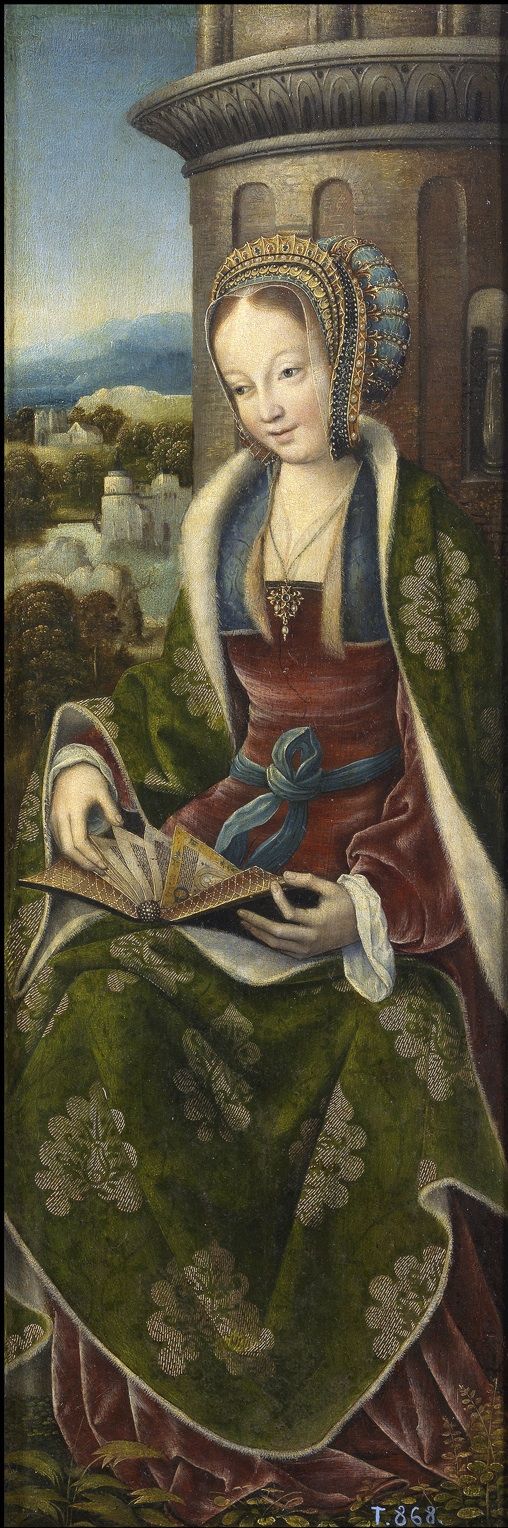
st-barbara-wings-of-tryptich-by-master-of-frankfurt-1510-1520

st-barbara-wings-of-tryptich-by-master-of-frankfurt-1510-1520

Venetian 1500 Gamurra

cropped-DSC02182a.jpg 

Portrait profile

Photography by Baron Bardulf Rauen

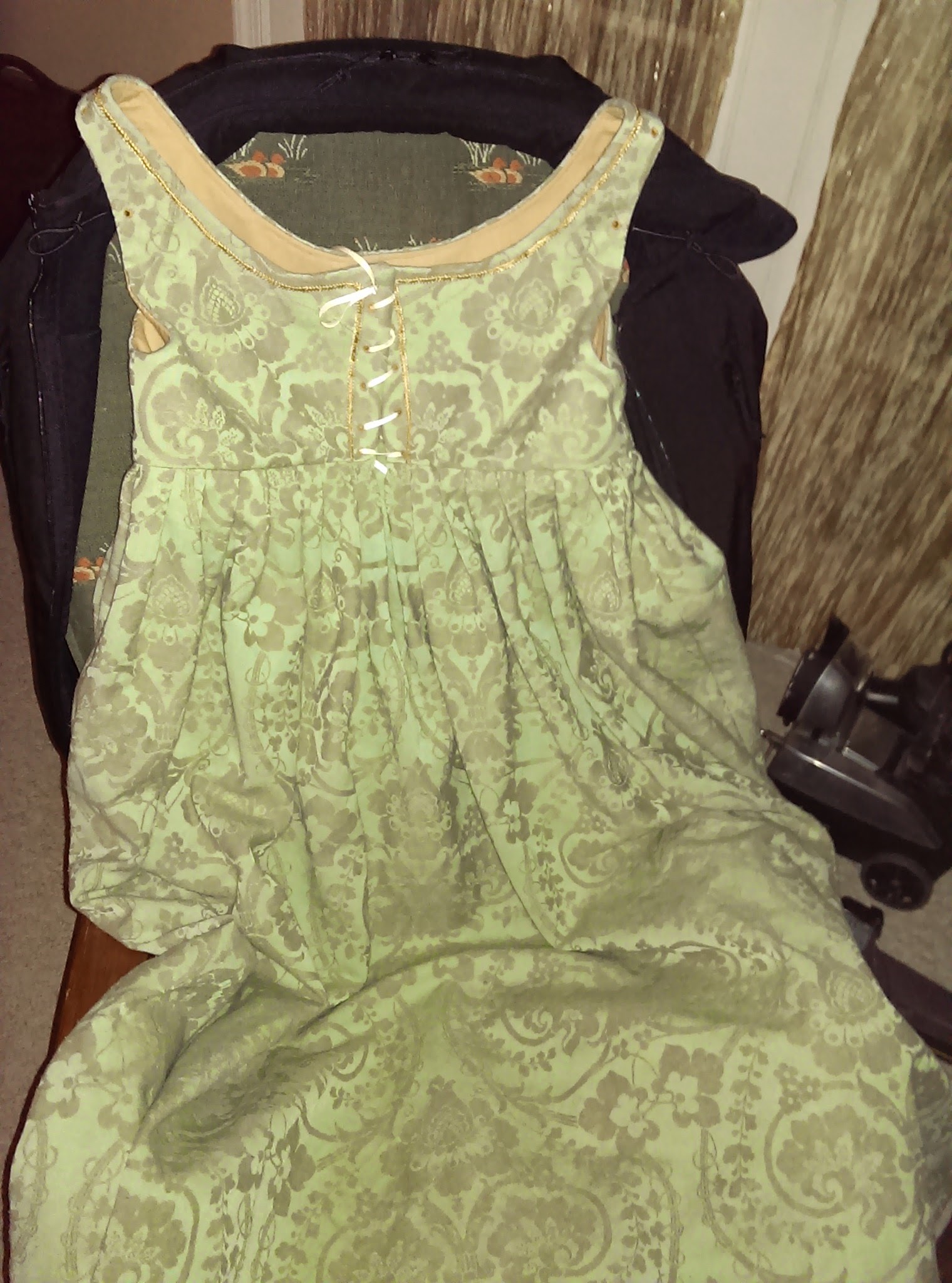
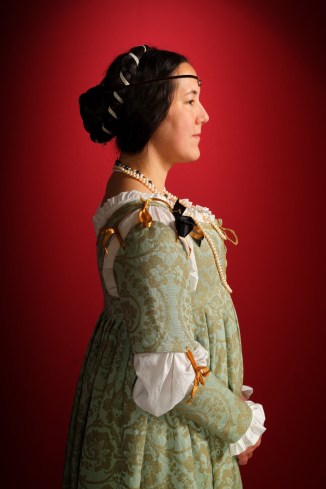
This is my new undergown for 1500 Venetian, created for Atlantian Twelfth Night and also for the Historically Sew Monthly January challenge…

The Challenge: Foundations- January

Fabric: Chemise of cotton voile, Gamurra of green and gold jacquard linen and rayon blend, bodice lined in 2 layers of cotton canvas, eyelets sewn with linen thread

Pattern: Drafted and refitted from my fitted body block to an under bust bodice, sleeves cut down from my sleeve sloper

Year: 1500 venice

Notions: gold braid trim,  gold ribbons (replacing now with silk and points), black ribbon for mourning, luceted lacing cord 

How historically accurate is it? As close to the portraits as I could get with little evidence from extant garments other than chemises, each decision regarding construction and cut were done after comparing multiple images,  my neckline is not quite as broad but that was based on coverage and support needed in the bodice which is unboned but is the foundation garment

Hours to complete: Total: 32   (Cutting and fitting: 6, Sewing: 12, Eyelets: 14)

First worn: Atlantian Kingdom Twelfth Night, January 10, 2015

Total cost:$102   fabric and supplies from my stash other than new silk ribbon and aigrets just acquired to add on,  estimate $24 voile, $48 linen blend jacquard (yay for half price remnant bin), trim and thread unknown,  when added $26 silk ribbons and $4 aiglets

venetian full length left

Photography by Baron Bardulf Rauen

And the few construction pics that I took…
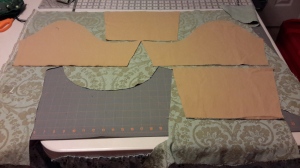
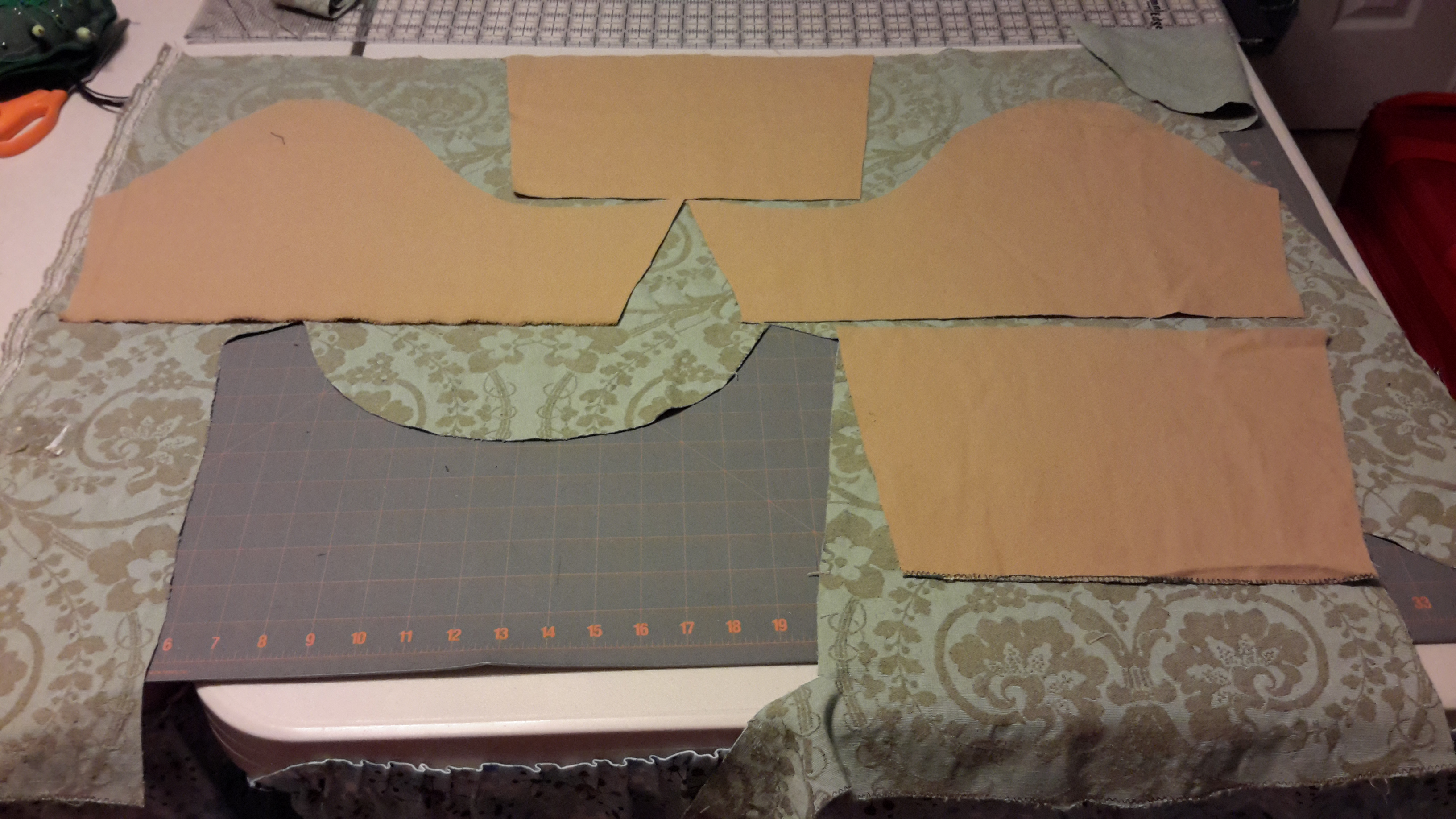
Cutting out sleeves after bodice back got a centered motif
Cutting out sleeves after bodice back got a centered motif

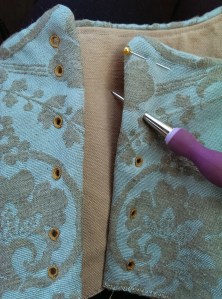
Creating eyelets on bodice
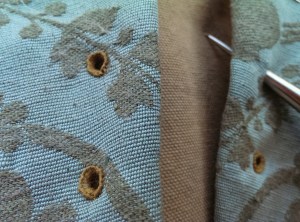
Creating eyelets on bodice

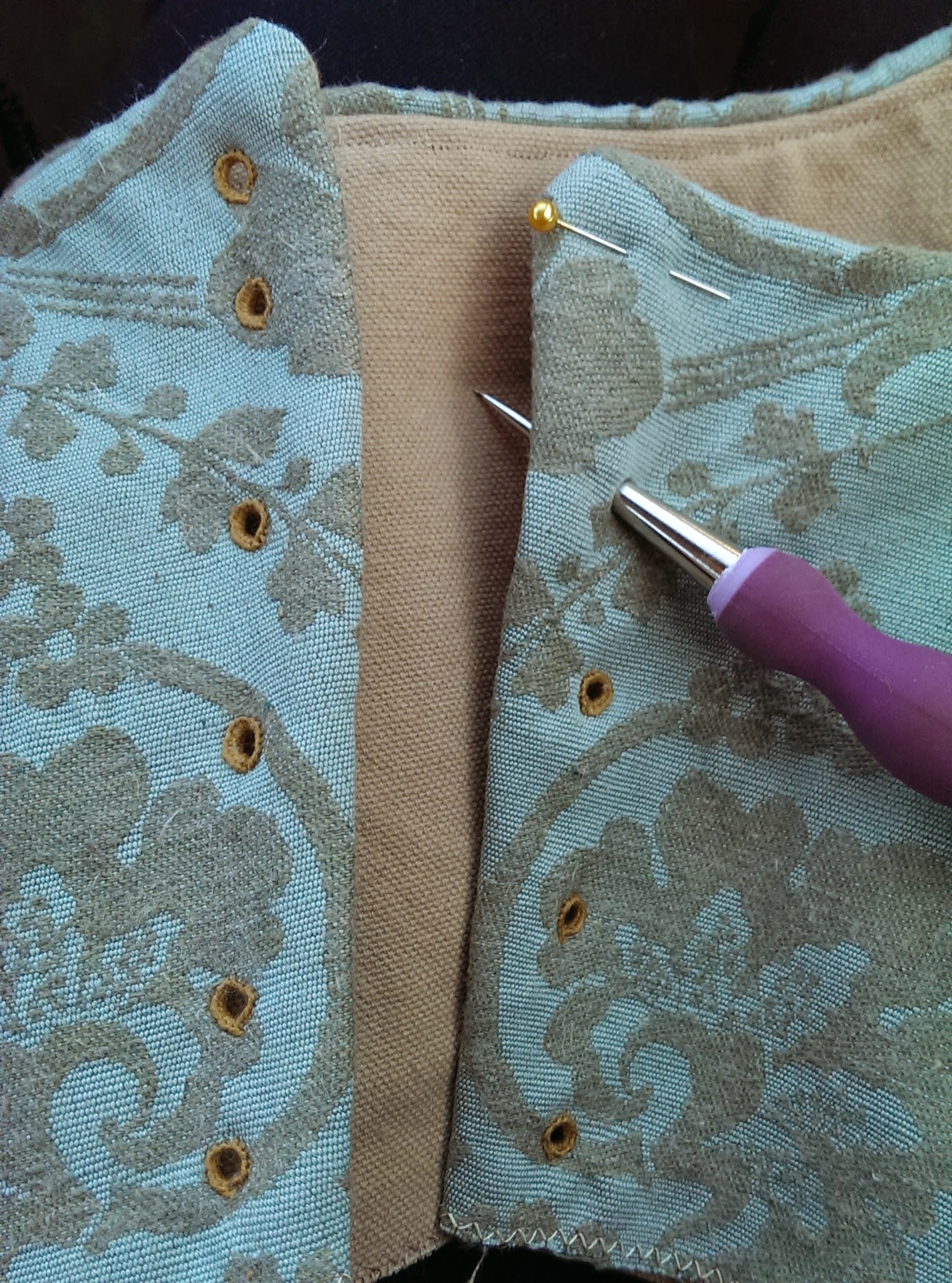
Closer view of eyelet construction
Closer view of eyelet construction

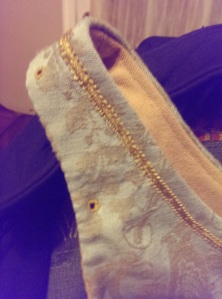
Trim and shoulder eyelets
Trim and shoulder eyelets

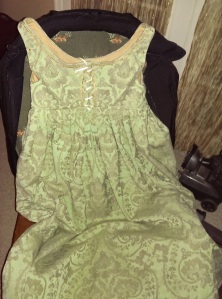
First stage done, time to finish sleeves

First stage done, time to finish sleeves

And the inspiration images:

Squared neckline but higher than some, love the ribbon detail and the black ribbon for mourning, her necklace also inspired one of mine

young venetian woman Durer

Photography by Baron Bardulf Rauen

Squared neckline and more ribbon and sleeve detail, fine gold work on edge of chemise

Supposed portrait of Bianca Sforza,an illegitimate daughter of Lodovico il Moro,c.1500

Photography by Baron Bardulf Rauen

Squared neckline with longer bodice, could be front closing with ribbon ties as on sleeves, looped and draped necklace, headband with stone
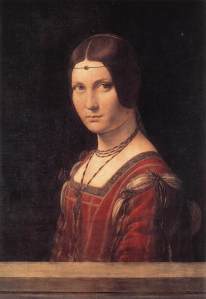
Leonardo da Vinci, La Belle Ferroniere, 1490.

Leonardo da Vinci, La Belle Ferroniere, 1490.

Ludovica Tornabuoni, by Domenico Ghirlandaio

Photography by Baron Bardulf Rauen

Rounded neckline with short bodice, both layers front closing, undergown closing edge to edge, overgown closing in wide V to show undergown, interesting partially sewn sleeves on overgown


Upping my game challenge continues…

This year on my annual “slow down time to go camping for 2 weeks mostly immersed in the past and gaining great campfire therapy in bardic circles” I was inspired…  I am inspired every year and want to do something new- I am also disappointed every year that I haven’t gotten to the things I would have liked to have had done before that year.  So, this year I applied my planner brain to my hobby and made some simple objectives.  For those of you who have been through my trainings you know that objectives are measurable, specific, and reasonable.  They differ from goals which are broader things you want by breaking them down into the things to do to get what you want.  Now, before anyone lambastes me for applying logic to my fun life and thus making it no fun, I assure you that I started this with the belief that getting things done will improve my overall enjoyment of my hobby and create less of the disappointment next year with not having projects done that I wanted done.  And in tiny baby steps it already is having that effect!  3 months in and I am loving the results…in fact they have started exceeding expectations… but I am getting ahead of myself.

What started with a goal of “Upping my game” was focused by the fact that I most enjoy beautiful garb and song and wanted to get things done and expand my repertoire in both areas.  So, I created two simple objectives-

1. Finish one piece of garb each month

2. Memorize a new song each month- prepped for performance

The results so far?  With August being only half a month after I got back I still got a set done that month and have been a little ahead of myself since then.  I have also teetered on the one piece of garb being pre-1600 or not since I do other periods and have deadlines for some of those pieces… Currently my freshly memorized songs have been all by Heather Dale- partly what drifted to the front and wanted to be learned with a special request deadline thrown in and a museum program deadline.  I though that as I go I should keep track of what has been the result f the challenge so far.

August- finished Geometric Tunic with hand felled seams, memorized “My Only My Own” by Heather Dale, posted video with both for the demanding daughter…

September- finished Viking apron dress with hand felled seams, memorized “Lily Maid” by Heather Dale and “The Old Duke” as a marriage proposal request for a friend

October- cut and started a rain cloak that I’ve been kicking myself for 5 years not having done, got sidetracked by fixing a regency gown and making a Civil War era Mourning Gown for Halloween, memorized “Skeleton Woman” by Heather Dale for use at our Tales and Treats program with ghost stories and other ghostly/bonesy songs

Not quite Halloween yet, but I was afraid I’d start losing track of these.  Some will overlap with my A&S 50 challenges as I start doing clothiers workshops but more modern projects are coming up on the event deadline radar…

Regency Pelisse for a Nov presentation, Victorian winter wear for Victorian Holiday Faire, early Italian Ren for Twelfth night, the double layer Viking Coat I’ve been meaning to make for COLD, the portrait reproduction fur lined early Tudor gown that keeps me up at night…


Civil War Ball Gown- Green & Gold

Photography by Drew Harting

Photography by Drew Harting

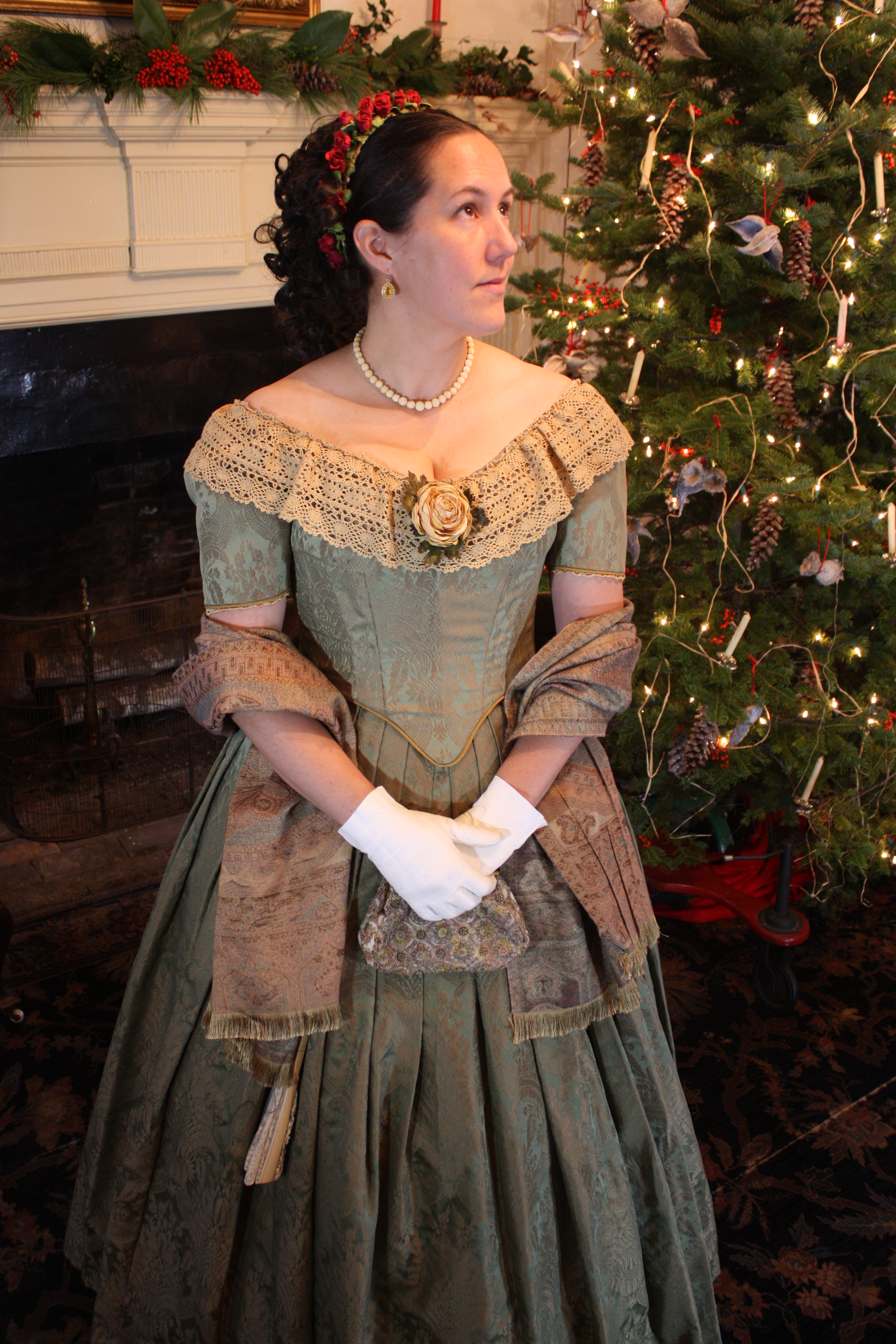
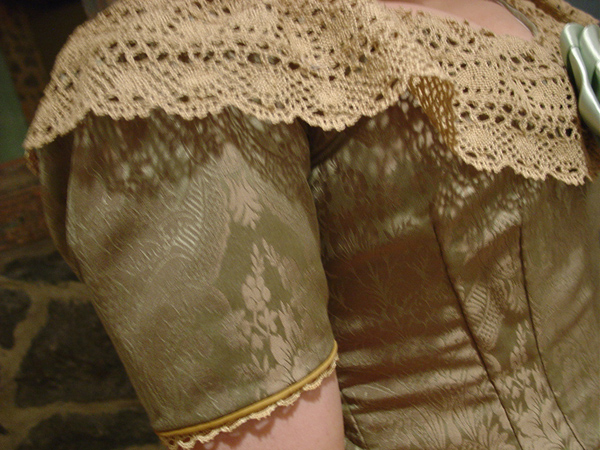
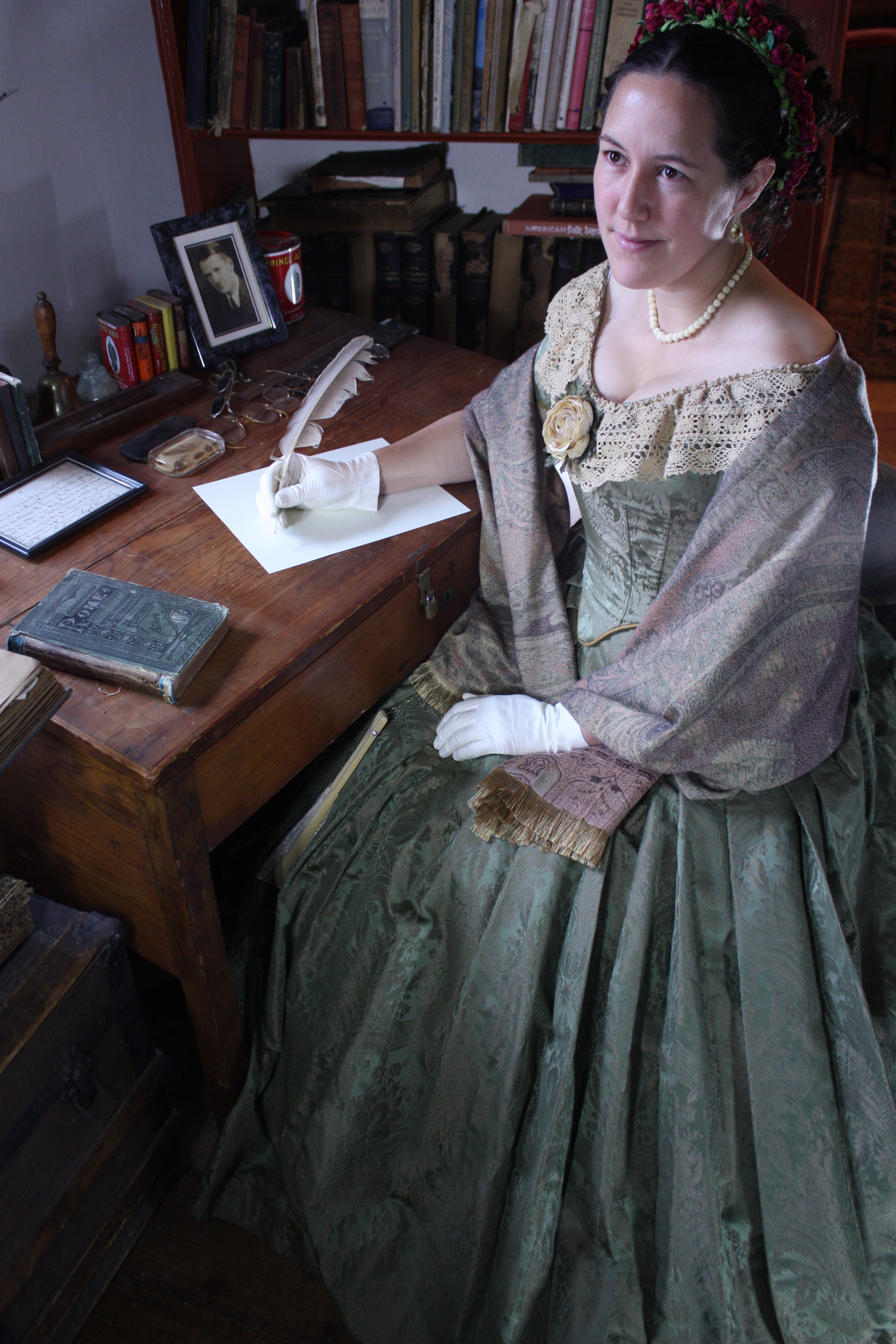
This richly colored civil war ball gown brings to life the crinoline era, or early Victorian period.  The rich moss green and gold damask is complimented with antique gold lace and piping, which was inspired by a gown from 1860 in the Kyoto museum.  The smooth line of the body emphasizes the small waist with wide shoulders and the width of the hoop.  The bertha, or lightly gathered lace section across the neckline, emphasizes the width at the shoulders and creates a lovely frame for the face.  The antique gold piping pulls out the gold color but also reinforces the bodice and arm edges while being decorative. Piping was a very popular decorative and reinforcement element in the civil war period. This gown is made from a modern rayon and polyester blend, but it was used because of the original gown it called to mind and because with bulk of the fiber being rayon, man-made but still a natural fiber content, it remains comfortable while having the right drape of heavy silks. When I saw this fabric, it reminded me of a gown in my Kyoto book and by replacing the white with gold I used the original gown as inspiration and guidance in shaping and trimming this gown. I have since replaced the rose with a gold silk rose to better match the original.

  • 1860’s Chemise with pin tucks on the front and tiny cluny lace at the edges
  • Corset, hoops, and petticoats to create shape
  • Smooth bodice with lace bertha, piping, and cluny lace at sleeve edges
  • Machine sewn inner seams
  • Hand finished (hems, edging, lace casings)

civil green sleeve detailcropped-IMG_0005.jpg

civil green inspiration civil green front

Photography by Drew Harting

Photography by Drew Harting

Photography by Drew Harting

Photography by Drew Harting

civil green and blue

Civil War Ball Gown- Blue & Cream

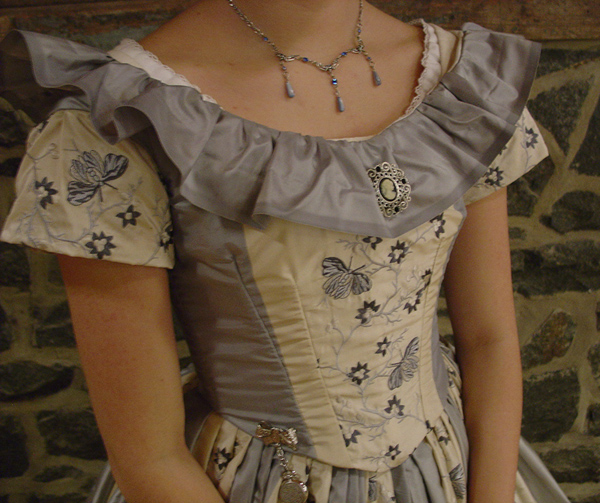
This lovely civil war ball gown brings to life the crinoline era, or early Victorian period.  The pale cerulean blue and cream striped fabric is embroidered with flowers and butterflies in the stripes. This is a silk fabric with rayon embroidery from vintage curtains found at auction, yes, this makes it a real Scarlet O’Hara dress since it is made from curtains. We removed the linings and hooks and recycled them into new curtains. Pale colors were much favored for candlelit ballrooms and by younger ladies. My daughter loves blue, butterflies, and flowers so this fabric was a given for her gown. The bodice is pieced to center the embroidery motif on each side and it is finished with a self fabric bertha proportioned to balance the gown on a small stature. The smooth line of the body emphasizes the small waist with wide shoulders and the width of the hoop.  The bertha, or gathered and ruched section across the neckline, emphasizes the width at the shoulders and creates a lovely self-fabric trim.  This gown is made from silk taffeta and is hand finished to complete the period look.

  • 1860’s Chemise with smocking on the front and tiny cluny lace at the edges
  • Unboned “Sensible Stays” rather than a corset to create shape
  • Ballgown with smaller cup sleeves and self fabric ruffle bertha
  • Machine sewn inner seams
  • Hand finished (hems, edging, hooks and eyes)

civil war blue front civil war blue front detail civil war blue dancing civil war blue dance civil war blue back view

Civil War Ball Gown- Peacock Blue

This lovely civil war ball gown brings to life the crinoline era, or early Victorian period.  The bold peacock blue color of the silk taffeta is contrasted with black lace and flower trim, which was one of many fashion trends from 1860-1865.  The smooth line of the body emphasizes the small waist with wide shoulders and the width of the hoop.  The bertha, or gathered and ruched section across the neckline, emphasizes the width at the shoulders and creates a lovely self-fabric trim.  This gown is made from pure silk taffeta and is hand finished to complete the period look.

The gentleman in pinstripes is my Dad, we modified a modern shirt, wool pants, and wool jacket for him by altering the cut and replacing all of the buttons. I made his vest and cravat to create this dapper civilian impression for the Remembrance Day Ball at Gettysburg.

  • 1860’s Chemise with pin tucks on the front and cluny lace at the edges
  • Pure Silk Taffeta Ball Gown with Self- fabric Bertha and black cluny lace
  • Machine sewn inner seams
  • Hand finished (hems, edging, hooks and eyes)

civil war p blue side view civil war p blue side long civil war p blue front civil war p blue dance civil war p blue alone